Showing posts with label Mythical creatures. Show all posts

Monday, July 18, 2011

Harry Potter and the Deathly Hallows Part Two (dir. David Yates, 2011)


There isn't really very much that's Classical in Harry Pottter 7b - aside from the usual Latin names and spells - but I'm nothing if not a completist so I'm covering it anyway! Spoilers follow.

Harry Potter 7b (thanks to Kermode and Mayo for that nickname) does contain a dragon, so perhaps this is a good time to discuss ancient dragons. Dragons as we imagine them are generally either Eastern (the long ones, especially if they're friendly, like that one that looks like a dog in The Neverending Story) or Norse (the fire-breathing, treasure-hoarding ones). However, the word 'dragon' comes from the Greek drakōn, Latin draco, both of which essentially mean 'large serpent'. In Classical myth, a dragon is long and toothy, more like an Eastern dragon or perhaps a wyrm-type of dragon, but it doesn't really have any special qualities other than size. A dragon guarded the Golden Fleece, but that was more because it had been placed there as a suitably scary monster rather than because dragons had any particular connection with treasure hoarding. Whereas modern pop culture dragons, aside from usually having a heavier shape, tend to have certain qualities - cleverness, a weak spot in a thick hide, a fondness for treasure - ancient dragons really are just big snakes. The dragon in the film is definitely a modern-by-way-of-Norse dragon.


The dragons that pull Medea's chariot as she makes her escape, and the dragon that guarded the Golden Fleece swallowing Jason - as you can see, they're basically just big snakes.

Draco Malfoy's first name, of course, means dragon, but it is also the name of a legendary ruler of Athens who brought in a set of incredibly harsh laws in which the death penalty was laid down for just about everything. These laws were repealed by Solon, except for the murder laws, and it's Draco of Athens that gives us the word 'draconian' for a particularly harsh set of rules. Draco Malfoy is named for the mythological creature - in fact, for the mythological creature in its Classical, big-snake form, given that he's a Slytherin through and through. But I can't help feeling that the most harsh of the ancient law-makers is a pretty suitable connection for him as well!

I really enjoyed the film, and almost everything I wanted to see in it was there. (The exception was the wonderful scene where Professor McGonagall enchants a bunch of school desks to go after the bad guys, which I loved, but I understand why it wasn't included). I was a bit sad to see Draco still refusing to stand up for, well, anything, but I'm very glad the scene with Narcissa and supposedly-dead Harry was kept, which was one of my favourite parts of the book. Mrs Weasley kicked bottom, though I expected her to shout louder! Poor old Fred's death scene got a bit curtailed, which was a shame, and I wanted Neville to kill the snake in front of the whole school, not just Ron and Hermione. And the entire film felt a bit like one big climax with no build-up - since all the build-up was in 7a - which I guess is justified after ten years and eight movies, but does make it feel a bit incomplete. Though we did get to spend almost all the movie in Hogwarts again, which was great.

There were some parts I absolutely loved. Neville and Luna make a great couple. Perhaps my favourite moment of all was Professor McGonagall telling Mrs Weasley that she'd always wanted to do the spell that makes the statues turn into an army. Helena Bonham Carter as Hermione on Polyjuice Potion was completely wonderful and, bizarrely, had better chemistry with Ron, though the kiss in the Chamber of Secrets was nice. Ron yelling 'that's my girlfriend!' like he's secretly been wanting to do for eight movies was good too. Snape's death and the revelation of his memories were great and I cried - I especially loved that they got the shorter wig back for some of the sequences set in the past - though I did wonder how Voldemort thought he could win the wand from Snape if he got a snake to kill him (because he disarmed him I suppose).

The epilogue worked better on the film than it did in the book for me. I think it's because the railway station is such a symbol of the world of Potter, because Harry's offspring is trundling along an identical cart to Harry's and most importantly, because the original John Williams score comes back. The use of the first movie's music all over the end section - with it's more magical, enchanting and especially more upbeat sound! - really brought the story full circle and was the perfect way to demonstrate that all is well in the wizarding world once again. It was like that moment at the end of Revenge of the Sith where the two suns appear on Tattooine and the original score plays and you just want to watch the whole set of movies all over again from the beginning (in Star Wars' case, from No. 4, of course). It's actually the perfect ending for the film and for the series, and I foresee many circular viewings of the films that both start and end with the flawed but magical first film in the future!

Sunday, May 8, 2011

Doctor Who: The Curse of the Black Spot


There's Classics and Archaeology all over this series of Doctor Who - I don't think I've ever seen so many bloggable episodes in one series! (Bearing in mind River is certain to return by the autumn if not before, and we might be seeing Rory the Roman again as well).

This episode had a lot of very promising ingredients for a Doctor Who story - Pirates! Treasure! A Curse! Hugh Bonneville! Rory! Matt Smith continues to grow on me and much of the episode featured a nice, traditional adventure story with a bit of danger, and the TARDIS going missing, which always ratchets up the tension nicely. A few flaws at the end - Rory dying holds no dramatic power whatsoever any more because he's done it more often than Harry Kim and we didn't need the reminders of the Doctor's apparent (and equally drama-free) impending doom and Amy's maybe-pregnancy, because this was a stand-alone story and should, therefore, have stood alone. On the other hand, I'm sure we'll see Captain Avery and his crew again in the future, and I look forward to that, pirates are always good fun. And the Doctor's characteristic dislike of firearms is back to normal after last week's unusual fondess for bottom-kicking, so all's well with the world again.Link
I blogged about Sirens in general a good while back, when reviewing the Red Dwarf episode 'Psirens'. To sum up; ancient depictions of Sirens often included wings, which never get into modern depictions, and I don't think they became sexy until after their most famous appearance in Homer, though this was a point of some debate. The main difference between this Siren and your classic Sirens was that she functions best in becalmed water, rather than dashing people to their deaths against the rocks, for which I presume rough seas would be more effective; plus, of course, she's entirely well intentioned and not a psychopathic killer at all. This episode does rather make you wonder what other forms Voyager's holographic Doctor could have taken (wonderful as Robert Picardo is in the role). The Doctor kept calling her a mermaid, which was mildly irritating - although Sirens are sometimes depicted as mermaids in later (non-Classical) works, this one definitely had legs.

I rather like the reinvention of the Siren as an essentially benevolent (sort of) force, though the inversion is less dramatic for being a bit too reminiscent of other relatively recent Who episodes (Moffat's own 'The Empty Child/The Doctor Dances', chiefly, and people going poof! but turning out to have been transported, not killed, appeared in 'Bad Wolf'). Her music was nicely ethereal and is one of those things that's really hard to do, like casting Helen of Troy - how do you decide what the most beautiful song in the world sounds like? (I like Ariel's little ditty from The Little Mermaid, myself). The idea that she appeared beautiful and sounded beautiful if you'd been injured, almost like a drug, solved this problem rather nicely, as we could imagine she looked and sounded even more beautiful to those under her influence.

I was less keen on the Doctor's reference to 'folklore' that says the Sirens go after treasure ships. Perhaps there's some post-Classical folklore that has them do so, but Greek Sirens just like to crash ships for the lolz, usually - which in some ways can be more frightening and more interesting, though of course it wouldn't fit this story. Talking of interesting, why did Avery become a pirate? We never did find out. Perhaps he's going to show up again later and explain then, though I would have preferred an explanation here - again, this is supposed to be a stand-alone episode. Russell T Davis had a knack for making episodes feel complete and surprising you by picking up on them again later (the watch from 'Human Nature/The Family of Blood' that reappeared in 'Utopia', for example) but there are so many hanging threads this series nothing really feels complete.

Some major plotholes here (why aren't the Doctor, Amy and Avery put straight in the sickbay? why does CPR have a 100% success rate on TV, when it has a 20% success rate in real life?!) but this was a fun run-around with lovely production values and I'll be quite happy to see Avery and his crew again, as we undoubtedly will. If they bring more Classical creatures with them, so much the better!

Thursday, March 31, 2011

Neverwhere (by Neil Gaiman, TV series co-written by Lenny Henry)


Neverwhere is both a book and a TV series - that is to say, both were written at more or less the same time, neither is an adaptation of the other. I read the book a couple of years ago, so my memory of it is a little bit fuzzy now, but I visited an old friend last weekend and we watched the whole TV show from beginning to end.

The first thing we quickly realised was that it was much newer than we thought - both of us were convinced the show must have been from the late 80s, but it turned out to have been made in 1996. The special effects, style of direction and cinematography (telematography?!) and even the style of the acting, however, could have come from any point from the 70s to the 90s, I think - my friend wondered aloud how spectacular it could be if made now. The first of two standouts, acting wise, was clearly Patterson Joseph as the Marquis de Carabas (that's why he always looks irritatingly familiar to me!) who was shorter and less skinny than the Marquis was in my head, but absolutely brilliant. We both finished the series desperate for a twenty-years-on follow-up showing us where the Marquis is now, and what he's doing - killing alligators in New York, possibly. (Joseph ought to have been the Doctor, I think - him or Adrian Lester - but I digress).

As in much of Gaiman's work, there are Classical references scattered liberally around the place. My friend is not, I think, 100% convinced of the value of Latin in the school curriculum, so I couldn't resist suggesting that if Classics was better taught in schools, our hero would have known that whenever a woman introduces herself as 'Lamia', it is time to run away very fast. The name of the ancient bogeywoman who ate children is perfect for a sultry heat-vampire (played by Tamsin Grieg, the first time I've seen her play sexy or dramatic as she's much better known now as a comedienne, though she did play mildly sinister in Doctor Who once) and Gaiman obviously likes it a lot, since he used it for the witch in Stardust as well. Oddly enough, my friend felt that this was not a situation her students were likely to come across in life, though I think there's no harm in being prepared.

Various other Classical references crop up every now and again, chiefly attributing just about every major disaster you can think of, including the mythological destructions of Atlantis and Troy, to the hired thugs, Croup and Vandemar or to the ultimate villain, Islington. The main Classical reference, though, is the Labyrinth containing the Beast, clearly modelled after the famous Cretan Labyrinth which contained the Minotaur. This being 1996, the peculiar fashion for minotaurs that I noticed last year didn't seem to have come in yet, so the beast was not half-man, half-bull, but a simple bull. To be honest, it wasn't even an especially large or menacing bull - it was quite clearly just a Highland cow, shot in shadow. This was one sequence where the book definitely had the edge over the TV series. The battle between Hunter, Richard and the Beast was exciting, scary and tragic in the book, whereas I'm afraid, on TV, it was mildly comical and far too short. I can't help thinking they should have gone for a Minotaur and used a man in costume, so they could have choreographed a proper fight, but I suppose that wouldn't fit the Beast's backstory, nor Hunter's African-beast-hunter identity. For her to pursue it, it had to be a proper beast.

A Highland cow, or coo if you're trying to do a bad Scottish accent. They're gorgeous creatures and I love them because they remind me of holidays in Scotland when I was little.

The thing that had stuck in my mind for 15 years after I first saw the TV series was Peter Capaldi's performance as the Angel Islington. I loved the idea that there was actually an Angel called Islington (being familiar with the name from Monopoly), I loved that he turned out be evil and I loved Capaldi's fabulously creepy, yet strangely serene, performance (complete with mid-90s big hair which looked a bit like a halo). The whole evil-angel thing didn't bother me because it's quite sensibly pointed out that Lucifer was an angel, so it doesn't come across as a dig at Christianity (I realise that would be an improvement for some, but not for me), but a perfectly logical idea, given the mythology.

Watching Neverwhere again, at first I was struck by how old school Doctor Who it all felt, but soon became swept up in the story, just as I was the first time (albeit occasionally jerked out of it by trying to place the various familiar faces in the cast). I think the reason I love Neverwhere it that, like Narnia but in a different tone, it blends a whole bunch of different stuff together very successfully - Christian mythology, Greek mythology, urban mythology (I love the use of old, abandoned tube stations) and a fabulous assortment of styles, chiefly what looks gothic to me and aspects of the medieval. And it's all held together by a genuine concern about the homeless and the way people 'fall through the cracks' in our society - it's no coincidence that the TV version was co-written by Lenny Henry, the founder of Comic Relief. If you haven't come across Neverwhere, it's well worth seeking out in either book or TV form, though if you find slightly ropey special effects off-putting, you might be better off with the book!

I'm away for the weekend and will be back next week with another Spartacus review.

Saturday, June 12, 2010

Clash of the Titans (dir. Desmond Davis, 1981)


Yesterday was the launch of the latest issue of Rosetta, the departmental journal of the Institute of Archaeology and Antiquity at the University of Birmingham, and also the annual changeover of the editorial team. I don't have anything in this particular issue, but I'm a specialist editor and I was books reviews editor a couple of years ago so I still have some connections to the journal. For the launch, the team hired the Electric Cinema in Birmingham, one of a few cinemas with a claim to be the oldest working cinema in the UK (it closed for a little while, but is open again now) and put on a special showing of the 1981 original Clash of the Titans.

The Electric is a lovely cinema - it has an arthouse feel to it, with a small bar, cakes on sale and sofas and tables at the back of Screen One from which you can enjoy the movie in real comfort, but it shows major blockbusters as well as arthouse movies and classic screenings. I saw classic French film noir Rififi there a few years ago, a film I would never normally have watched on television never mind gone to the cinema to see, but which I was taken along to by my housemates, and it was brilliant (Rififi is the one famous for a half-hour long silent heist scene, though the rest of the movie is good too!).

Anyway, we were there to watch Clash of the Titans together and see how it compared to the recent re-make. Reactions to the film varied - some had forgotten that certain elements of the new film actually came from the old film, some were more impressed than they expected, others dsiappointed that it wasn't quite as good as Jason and the Argonauts (and contained rather more nudity!). The one thing that was universally popular was the cute little mechanical owl that sounded like it was related to The Clangers, which was more than a bit ridiculous, but far too cute to dislike.

I spent much of the film thinking that no Titans were clashing in this version either, but that maybe I could forgive it since 'Titans will Clash!' was not its tagline and assume that perhaps 'clash of the Titans' was a metaphorical reference to the clash between the 'titanic' deities Zeus and Thetis. Until, that is, two thirds of the way through the film one of the Stygian witches declared in a grandiose manner that pitting Medusa against the Kraken would be putting 'a Titan against a Titan!' Oh dear. As I mentioned when I covered the re-make, not only are neither Medusa nor the Kraken Titans (Medusa is a Gorgon, the Kraken is from an entirely different mythology), but I confess I really don't consider holding the dead head of one of them up at the the other one to be a 'clash' anyway. Ah well, they tried. At least they didn't use the terrible tagline.

There were a number of things about this film that worked better than the corresponding elements in the re-make. Most importantly, the ridiculously high calibre actors playing the gods, chiefly Laurence Olivier as Zeus and Maggie Smith as Thetis, actually had something to do, and real emotions to play. This is because, in this story, the gods experience and act on typical human emotions and human concerns, rather than seeming remote and disconnected. While, as Plato pointed out, this may be theologically unsound, it makes for a much more interesting story and is, in a sense, closer to the way the ancient Greeks told stories about the gods.

On the other hand, the older film does not contain the interesting idea of man railing against the gods that was so central in the newer version. In this film, no matter what terrible and senseless things the gods do, no one ever questions their power or their superiority. Considering what the gods can clearly do, this seems very sensible, but it is perhaps grating to modern sensibilities to see an innocent young woman led out to sacrifice without anyone so much as mentioning that this seems a bit unfair.

Andromeda herself is a curious mixture. At first she seems rather empty, without much personality, and rather shallow (it is initially implied that she was happy to marry Calibos before he was 'uglified', which would make her a wee bit on the shallow side, but once engaged to Persues, she suggests that she was never really that attached to Calibos anyway). On the other hand, she can be brave and stand up for herself, and the moment where she tells Perseus he's not her master yet and she'll do what she likes is quite good. Later, she is led calmly out for sacrifice to save her people - but starts to struggle and try to get away the minute she actually lays eyes on the Kraken. So, all in all, an odd and not entirely consistent character.

The Kraken itself has, perhaps, not aged as well as some of Harryhausen's earlier creations, looking rather like a cross between King Kong and Godzilla, with some extra tentacles thrown in. Whereas the skeletons in Jason and the Argonauts look as good now as they did when the film was made, both the Kraken and Medusa look rather bulky, clumsy and stilted in their movements, especially Medusa. Though I have to confess, during the Medusa sequence, the sofas became simply too comfortable and I nodded off for a few minutes, so she may have looked great in between the bits I saw! (I understand that I was not the only person this happened to).

This appeared on I Can Haz Cheezburger today, and made me laugh

The backbone of the plot, which is cut or altered in the new film to make way for the showdown between Aslan and Voldemort, is an original story that seems to be a strange corruption of elements of The Iliad with a bit of nineteenth century monster-within literature thrown in. Thetis, Maggie Smith's character, in Greek mythology is a sea goddess who is the mother of Achilles, played by Julie Christie in Troy. Here, she has a different son, Calibos, who is cursed by Zeus and made into a monster, and he becomes monstrous in personality as well, cursing Andromeda in turn for refusing to marry him and going around murdering people and making friends with vultures (he reminded me a little of the Phantom of the Opera - original book version). Thetis does not react very well to this and it is she that demands the sacrifice of Andromeda. Poseidon once again does nothing except let the Kraken out (in two very amusing sequences where he pops down to the sea bed looking like he's holding his breath) and Hades doesn't appear at all. Perhaps the new version was inspired by Disney's Hercules.

There are lots of fun touches in this movie. I like the statuettes of the mortals that the gods use, which look like playing pieces, and I was amused that the gods don't actually seem to have anything to do except stand around and have a chat in their pretty white robes when they're not cursing mortals. It was nice to see Tim Piggott-Smith, who usually gets given rather slimy or quietly tragic roles, getting to be properly heroic for once. Thetis' reference to Zeus trying to assault her as a cuttlefish got a laugh from everyone, and the conversation between goddesses was nice. Maybe the new version was inspired to cast Atia of the Julii as Cassiopeia by the casting of the Empress Livia as the same character in 1981 - and, just as in their respective TV series, the two are similar, but Livia is more imperious, more powerful and less interested in frivolities than Atia.

Less good stuff included the talking shield, repetitions of the word 'Invisible!' and once again the 'Stygian witches', which don't seem so much like the Fates in this one apart from the one eye thing, but seem to have got lost looking for Macbeth. Perseus' sudden cry of 'We have a flying horse!' got a laugh from everyone, but I'm not sure it was supposed to. Perseus' outfit was rather silly and not nearly as practical as the new one and why did Burgess Meredith's Ammon (a name of Zeus in myth) feel the need to throw cats around? Cruelty to cats is Not On!

The bit at the end about how the stars named for the characters would shine on 'even if we gods are abandoned or forgotten' was rather nice, and this was one of very few moments of philosophical intropection, nearly all from Zeus (though Ammon quotes Herodotus' 'call no man happy until he is dead'). Zeus implies that in the future, the gods may 'no longer be needed', which implies a milder version of the new film's hero's insistence on ignoring them as far as possible, and Zeus also notes at the beginning that a hundred good deeds cannot atone for one murder.

The very cute Clanger-owl, easily the best thing in the movie!

All in all, not the best movie ever made, but certainly not the worst either. I think watching it with a large group of friends helped, as this is a film best enjoyed as a light, frothy evening's entertainment, possibly with some alcohol. It hasn't stood up as well as some other, similar films of the time though, partly because the special effects have aged more noticeably than some others, and the plot and characterisation are too thin to compensate.

Monday, May 17, 2010

Clash of the Titans (dir. Louis Leterrier, 2010)


I finally got to see Clash of the Titans! And about three quarters of the way through it occured to me that, though it's unlikely to make any lists of the Best Films Ever, it's not actually that bad.

The plot is genuinely interesting - what would happen if mankind declared war on the gods? Although this seems like a rather foolish thing to do in a world where the gods clearly and unmistakebly manifest themselves and attack those who do not worship them (like the Discworld character who stands on a hilltop wearing copper armour in a thunderstorm shouting 'all gods are bastards', or something to that effect) there's a certain amount of philosophical interest in the question (the leading of Andromeda to sacrifice is reminiscent of CS Lewis' Till We Have Faces). The idea that the gods need worship and prayer is also very reminiscent of the Discworld, and possibly of Neil Gaiman's American Gods, which I'm still halfway through (no spoilers please!). The idea that Zeus feeds on love and Hades on fear is also an interesting one, perhaps setting them up as stand-ins for a Judaeo-Christian God and Satan. Of course, none of these ideas are explored in depth, but they are there.

On the other hand, this is the movie that had the worst tagline in history - Titans Will Clash! - which also turned out to be a blatant false advertising, as at no point in the course of this movie did any Titans clash in any way whatsover. Medusa is a Gorgon and the Kraken in from Norse mythology, which I know very little about - neither of them are Titans and they don't clash anyway, Perseus just holds up Medusa's dead head (there's a complete list of Titans here). Also, the other major clash, between the gods Zeus and Hades, is actually clearly a battle between Aslan and Lord Voldemort, with Aslan wearing King Arthur's armour from Excalibur. (And the Argosians seem to think they're living in Rome).

Some elements of the film's plot are from the Greek myths of Perseus - Medusa, Andromeda as sacrifice, the box the baby and his mother are found in. However, several elements have been changed, most notably that Perseus is the child of the king's wife, not his daughter, so that the box is vengeance for a grievance against the king, not an attempt to prevent his daughter from having a son that would kill him. Pegasus is also more strongly associated with Bellerophon, and although his birth from Medusa's severed neck makes his presence not totally unwarranted, here there is a whole herd, if that's the right collective noun, of Pegasi. Io, in this movie, is cursed with 'agelessness' rather than, somewhat less attractively, being turned into a cow, which is not very Greek, but does allow her to be a totally awesome action girl love interest.

In addition to the Norse Kraken, we have Arabian Djinn taking on a major role, whom I know pretty much nothing about and hadn't really heard of - except in Genie form - until I read the first half of American Gods. And there are some giant scorpions, not totally unknown in Greek myth but hardly an integral part of it. There are also some camels, yay! Although on that subject, I have to ask - where exactly are they? It looks like perhaps they're trekking across the Arabian desert, but why are the 'Stygian gardens' - whatever the heck they are, something to do with the underworld from the name - in the Arabian desert? Why is the entrance to the underworld there? (There's no fixed place for underworld entrances, it's just unusual). And why is Medusa, whose backstory has been substantially changed, in the underworld anyway?

Another slight problem with the film was that it's one of those OK films that remind you too much of a better film - in this case, Disney's Hercules. The two random 'hunters' claim several of the Labours of Hercules for themselves (they mention the Nemean Lion's skin, though Hercules wrestled it to death, and the hydra). Then there's Pegasus, Hades as the bad guy, the 'Stygian witches' who are pretty clearly the Fates as depicted in Hercules, and at the beginning, when Gemma Arterton was doing her voiceover, I was desperate for the Gospel singers to burst in and liven things up.

There are lots of other things I could pick apart - the way Zeus offers to take Perseus to Olympus as a god, which doesn't happen to demigods in Greek myth, the way Io screams when stabbed from behind, demonstrating that she has not discussed the matter with Sir Christopher Lee who, according to Peter Jackson on the Return of the King commentary, knows that people don't scream when stabbed from behind, the curious fact that the 'Stygian gardens', whatever they are, look just like Blaenau Ffestiniog. But there are really lots of good things about this movie too - the CG-set of Olympus looks good, and the equally CG underworld is wonderfully, creepily realised, especially the twisted wreck of a ferry and skeletal Charon the ferryman. Perseus is a idiot (use the magic sword for crying out loud!) but the supporting characters are reasonably likeable and there's just enough humour to keep things afloat. And the ideas are there, whether it's the gods' need for mankind, the idea that if men turn on each other they will be more inclined to turn to the gods, or the idea that mankind themselves are responsible for the rise of Hades; they're just very, very buried. All in all, you could see worse films, though I don't deny you could also see better.

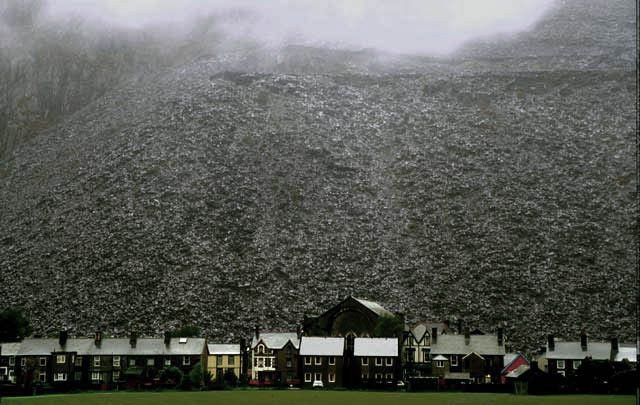
Blaenau Ffestiniog. Or, possibly, the Stygian Gardens.

One last point on Titans - this was the first 3D film that I've gone to see wearing my glasses rather than contact lenses and my goodness it was uncomfortable. Since not everyone can afford or wear contact lenses and plenty of us wear glasses, I think more design work is needed on the glasses before we all embrace 3D as the medium of the future.

And a final note - I also went to see Robin Hood at the weekend, which I really enjoyed - it wasn't necessarily historically accurate, but it did take a different approach to the legend, which was fun to see, and had a more complex plot than most Robin Hood films. There's a fuller review of it at Here, There and Everywhere.

Sunday, January 10, 2010

Fantasia: The Pastoral Symphony


For those who don't know - this is what Fantasia is. I love Fantasia. My brother and I got the video for Christmas when we were little, and we didn't have many Disney videos, so it was very exciting. I loved the magic of it - I remember sitting next to the Christmas tree with a doll I'd just been given by Father Christmas, pretending there were fairies in the tree branches. I'd been in a couple of productions of The Nutcracker when I was even littler - I was a mouse, all we really did was run around pretending our fingers were whiskers - so the Nutcracker segment was my absolute favourite bit, but I liked it all. We both loved dinosaurs too, as a result of several trips to see the dinosaurs at the Natural History Museum and at least one trip to Crystal Palace park, so we also both enjoyed the Rite of Spring segment, though we were a bit upset when all the dinosaurs died. And I'm not sure the Tocata and Fugue bit isn't wholly responsible for my brother becoming a musician.

One of the big statues of dinosaurs at Crystal Palace Park, London

As I said, I loved it all, but my second favourite bit, after the Nutcracker, was the sequence set to Beethoven's Pastoral Symphony (No. 6). I'd already fallen head over heels in love the Chronicles of Narnia, so I think the appearance of the centaurs appealed to me, and I was a child of the My Little Pony age, so the incredibly cute baby flying horses in different colours were also a favourite element. I also like the strong story-line. Deems Taylor explains at the beginning of Fantasia that some music suggests a strong narrative line to the artists, some presents them with a series of coherent pictures, and some just presents them with seemingly random images. I've always preferred music with a strong narrative element (still do), so I also tended to prefer the more strongly narrative parts of Fantasia, though for some reason I didn't like the Sorceror's Apprentice section so much at the time.

The Pastoral Symphony tells the story, musically speaking, of a beautiful day in the countryside, interrupted by a storm, which then clears. For Fantasia, the Disney artists decided follow this basic pattern, but give the whole thing a 'mythological setting' as Deems Taylor tells us in the introduction to this segment. The scene is loosely set in the Greece of mythology - we see Mount Olympus rising in the background at the beginning and a number of recognisible characters from Greco-Roman mythology appear - Dionysus/Bacchus, Zeus/Jupiter, Hephaestus/Vulcan and Apollo, as well as a personification of Night who could easily be a manifestation of the Greco-Roman Nux/Nox.

The characterisations of these gods are great fun. Dionyus seems to spend the whole thing drinking purple wine and both he and his donkey (it's Disney, you've got to have a comic animal sidekick) get very, very drunk. He's the usual image of Dionysus - fat, grapes round his ears, sort of jolly looking. Zeus and Hephaestus play 'smite-the-centaur-or-lesser-god-with-thunderbolts and seem to be having a great time, while Apollo doesn't do much except his job.

The other creatures are mostly drawn from recognisibly Greek mythology - centaurs, satyrs, cupids (the god Eros/Cupid was sometimes depicted in the plural). Flying horses are sort of Greek - Greek mythology really only has the one flying horse, Pegasus, but the idea is Greek. Unicorns, as a concept, were around in the ancient world, but more often as part of natural history than mythology - the image of unicorns we have today is more medieval than Greek.

Eveything in this sequence is weirdly coloured - it's all pastels, pinks and pale blues and soft reds. Presumably this is is to soften it, to make it appealing to children, to make it look more magical and fairytale like, and to let the artists have some fun with their colour palette.

The sequence opens with a view of Mount Olympus, and then we see a bunch of My Little Pony lookalike unicorns samper across the multi-coloured countryside. As a woodwind instrument of some kind starts to play, we see a satyr playing a set of pan pipes, to fit with the pastoral theme. Although traditional satyrs are wild creatures who enjoy rather a lot of sex and drink, these are depicted as childlike figures, barely more than infants. We don't see any grown-up satyrs.

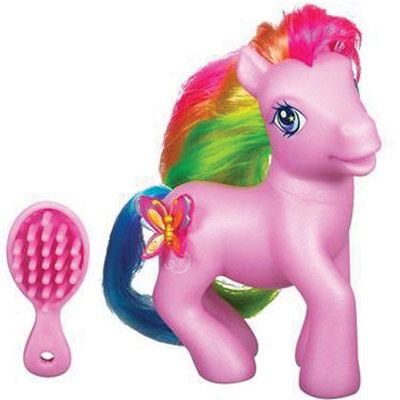
My Little Pony. Getting hold of the special hairbrush was particularly exciting.

Next, a family of flying horses glide across the scene, and we see a mother flying in a nest halfway up a tree, having just given birth. There are some more cuter-than-cute scenes of the My Little Pony flying horses learning to fly while their more graceful (and more Greek-looking) parents glide about, then they land on water and swim about like swans, and the first movement ends. The first movement really focuses on the childlike aspects of Disney's interpretation of mythology, and on making everything look as cute as humanly possible.

The second movement opens in a dark (but not threatening) lake and introduces two themes so far missing - partly human adults, and sex. A large group of female centaurs, most of them not, as Ariel the Little Mermaid would at all times, wearing bras, are bathing, accompanied by some more ridiculously cutesy, baby-like cupids. These multiple manifestations of the god of love lack the usual requisite bow and arrow - perhaps too violent for them - and are depicted as the infant-like creatures of the modern imagination, rather than as adults. As the female centaurs get out of the lake and start putting make up and doing their hair, they do put bras on, and then - the men arrive, or rather the male centaurs. They are all big, manly and very smug-looking. A positively bizarre sequence follows in which the female centaurs all get themselves all prettied up and then put on what looks like a fashion show for the males, showing themselves off until a male chooses them. Two get left out, but the cupids unite them. The centaurs, like everything else, are crazily multi-coloured, and every centaur ends up with another of the opposite gender but the same broad colour scheme. The implications of the whole sequence for gender and race relations don't even bear thinking about, but as a child, I was happily oblivious to any of that (though I do remember noticing the colour coordination, and even as a small child, I thought that was a bit weird, and worried about what would happen if the blue girl centaur didn't like the blue boy centaur...).

The third movement is livelier. The centaurs and satyrs bring massive piles of purple grapes and make wine, and Dionysus turns up (with some dark-skinned zebra centaurs, for some reason - perhaps a belated attempt to embrace ethnic diversity). Dionysus, as mentioned above is extremely fat and riding on a tiny, tiny donkey. He spends the whole time drinking and chasing the female centaurs, which is pretty appropriate to his mythology.

Then the storm starts and Zeus and Hepaestus do their thing. Zeus has a fantastic expression on his face the whole time, sort of smug and lazy and intrigued and not interested all at once. The way he pelts Dionysus and the donkey with lightening bolts is fantastic. Allthe other characters run and hide in a cave, except the My Little Flying Horses, who go back to their nest. We even get to see the anthropomorphised winds briefly. All the wine caskets break and wine flows everywhere, which Dionysus and the donkey proceed to drink, a bit like the bit in A Tale of Two Cities where a wine barrel breaks and the desperate peasants drink it from the street. When Zeus has finished throwing lightening bolts at everyone, he goes to sleep in the clouds, using cloud as a blanket - when I was little, I got the vague impression that he must live somewhere near the Care Bears.

The final movement depicts the calm after the storm, and a rainbow (anthropomorphised, of course) is drawn over everyone while they play in the puddles. Finally, the sun sets and everyone waves goodbye to Apollo in his chariot before going to bed (in pairs. There are going to be a lot of My Little Baby Centaurs running around in a few months).

A lot of this sequence relies on the 'cuteness' factor, so how much you like it will depend on how you feel about 'cute' things, while the gender and racial aspects and distinctly disturbing. I still love it, though - it puts a sense of magic and wonder into Greek mythology that isn't always found, and the Greek pastoral motifs of Pan, satrys, pan pipes and the creatures of the countryside fit the Pastoral Symphony perfectly. And it was really good inspiration for My Little Pony games...

Tuesday, June 16, 2009

Hercules (Disney, 1997)


There are two main reasons why all classicists should watch Disney's Hercules. Firstly, because for future generations of classicists, this will, quite possibly, have been their first introduction to anything from the ancient world and secondly, because the music is ace (what can I say, I'm a sucker for a good show tune).

The style of the animation in Hercules is suppoed to evoke the style of Greek vases, though I have to confess it looks a little odd to me. 'Hercules' is actually the Roman name for this hero - the Greek is Herakles. Everyone else's names are Greek though ('Meg' being short for 'Megara').

We hear the deep, serious voice of Charlton Heston, assuring us that this is indeed a story of Long Ago and Far Away by sounding cool and mysterious, then launch into the first number, in which five of the (nine) Muses introduce us to Ancient Greece and the Greek gods.

(I have to confess, I'm always a little uncomfortable with the refrain about how they're singing 'the gospel truth'. It strikes me as a bit disrespectful towards Christianity, and it's not at all appropriate to Greek religion, which was not dogmatic and which always allowed for multiple, contradictory stories about the same hero. But that may just be me being over-sensitive).

We're introduced to Zeus and Hera as Hercules' parents, and as husband and wife. Oddly enough, Disney leaves out the detail that they're also brother and sister. In the World According to Disney, Hercules is the son of Zeus and Hera, both gods, not the result of a liason between Zeus and Alcmene. This leaves them with a bit of a problem - how can Hercules be half-mortal without a mortal parent?

A Disney movie also needs a bad guy, so enter Hades, who is much more interesting to watch than any of the others because he's much funnier. When power over the cosmos was handed out, Zeus got the sky, Poseidon got the sea and Hades got the underworld and, in this version, he is (perhaps unsurprisingly) a bit miffed. He is assisted by Pain and Panic (A variant of Those Two Guys) and the Fates (who assure him that indoor plumbing has a future).

The plot of the movie is basically the invention of the Disney writers, though they draw on elements of Hercules' mythology. However, none of the major plot elements from the film come from ancient myths, and they have more in common with Disney's usual basic plot elements; young guy undergoes rite of passage type experience in which he defeats the bad guy and gets the girl (see also Aladdin). This is presumably because the Disney corporation feels that extra-marital affairs, spousal homicide, man-consuming fire and a whole lot of dung are unsuitable for their tender audiences.

So Disney's Hercules is found by Alcmene and Amphitryon, having survived Pain and Panic's attempt to poison him, which has left him mortal (i.e. not glowing any more - all gods glow, apparently) but supernaturally strong. This would presumably be fine if he wasn't also very clumsy, but his tendency to knock buildings down has made him an outcast, so he asks Mum and Dad why he's 'different' and why he dreams about people cheering his name (other than the obvious vanity). They explain that they found him with a medallion showing 'the symbol of the gods' (a bolt of lightning - not actually 'the symbol of the gods', but it would be associated with Zeus). So off he goes to a temple of Zeus to pray for an answer.

Herc wanders off through the rain and up a hill to a temple that looks a little bit like the Athenian Parthenon, where, magically, he finds the lost statue of Zeus from Olympia, one of the Seven Wonders of the Ancient World (see Wikipedia). Maybe this is why its lost - because some fool stole it from the town of Olympia and stuck it on top of a hill...


A very old and fuzzy photo of the Temple of Zeus at Olympia, from a school trip from many years ago. That's me in the middle, pretending to be Zeus. Don't ask.


As soon as Herc has finished his prayer, the statue comes to life, starts talking to him, and tells him he's actually its own son. Strangely, Hercules does not assume that he ate a dodgey mushroom, but buys the whole story. I think I'd worry about anyone who cheerfully accepted the information that they're the son of the chief god that quickly, thought of course, it does explain his super strength. I can't quite make out whether the statue stands up or not - if it stood up in its own temple it would break the roof, but maybe the new temple is taller.

Zeus reunites Hercules with Pegasus, the flying horse who was given to him as a child (this is bound to annoy Bellerophon, who more usually rides Pegasus). Zeus tells Hercules that if he becomes a true hero, he can become immortal again and join the other gods on Mount Olympus, and sends him to Philoctetes for training. Its a good thing Herc doesn't go to see the better known Philoctetes, who was a man who left with the Greeks to fight the Trojan War but was left behind on the island of Lemnos because he'd been bitten by a snake and the wound was too smelly.

This is an entirely new Philotetes, but he does behave much more like a character from Greek mythology than the rest - a typical satyr, he's a pervert who spies on naked women, who are then forced to turn into trees to avoid him.

Then there's a Training Montage! By the end of it, Hercules is about four times as big and muscly as he was at the start.

Finally, we meet Meg, one of Disney's best heroines (if we overlook her ridiculous figure). Surprsingly and somewhat disturbingly, Disney have apparently decided that rape is far too big a part of Greek mythology to leave out, though they leave it at attempted rape and they swap Hercules' second wife, Deianeira, for Meg, but this is probably the closest the film gets to actual Greek myth. Meg even explains what happened to Hercules, who doesn't understand, and tells him Philoctetes will explain it to him later. I bet a lot of parents loved that.

Meg, on the other hand, is a thoroughly modern girl and has a fantastic conviction that all men are worthless, making even more cool and snarky than Princess Jasmine. Pegasus is really, really jealous of the attention Hercules gives her, which might lead one to worry about their relationship...

Phil takes Hercules to Thebes, which was a somewhat unfortunate city according to ancient mythology. Meg has soldher soul to Hades and is working with Pain and Panic to do Hercules in, so they lure him into a fight with the Hydra (actually one of the Twelve Labours: see here). I like Hercules' solution here, it's very cool.

Then there's another montage! Leading to my favourite lines:
Hades: 'I've got 24 hours to get rid of this bozo... and you are wearing HIS MERCHANDISE?!'

Hercules: 'I'm a action figure!'

And my third favourite, the song lyric in which two Muses argue over how to pronounce 'vase'.

The montage includes images from the some of the Twelve Labours, like the boar and the lion, all put on vases, which is a nice touch. Still no dung, though. Love seeing Hercules posing for a vase painting wearing the lion skin as well (he is frequently shown wearing this in ancient art, its his main distinguishing feature).

There's some slushy stuff between Meg and Hercules, prompting Meg to sing her song, one of Disney's best romantic songs - 'It's too cliche, I won't say I'm in love' etc.

As the plot starts to work towards its conclusion, we seen Hercules give up his strength for Meg, only to find out he's been betrayed - very tragic, very Greek. (Yes I know, Greek tragedies often had happy endings, it's Blogger's artistic licence, OK?!). Although the loss of strength thing is actually kinda Biblical. Hercules is willing to let others die to save Meg, but the film, oddly enough, doesn't look into the implications of that.

The conclusion involves the Titans capturing the Olympian gods, because all Disney movies have to have a BIG conclusion. Literally. The bad guys always suddenly becomes a giant, or a giant creautre, or calls up a giant creature to do bad things. I have never understood why Disney feels this is so essential to the climx of a movie, but there you go. I guess its the kiddie version of lots of explosives. Hercules also grabs hold of a tornado. Hmm.

I love the depiction of the underworld in this movie by the way. Its suitably gloomy and spooky and huge and empty, just like it should be. Not a nice place. Hercules gets a very cool katabasis (journey down to the underworld) in this movie, much cooler than his usual task of retreiving Cerberus. Here, he goes down to get Meg back (who has been remarkably cleanly crushed to death), more like Orpheus. The effect of the river, striping away his youth and killing him, is pretty creepy too.

All ends well, though, because in the World According to Disney, if you sacrifice your life to save someone else, this is what makes you a true hero, because the test of a hero is the strength of his heart. This would sound pretty weird to an ancient Greek. They told stories about a woman who sacrificed her life for her husband, but, generally speaking, they weren't very into self-sacrifice. As far as mythological heroes were concerned, what made you a true hero was killing a very very large number of people, preferably your enemies. Killing monsters would also do, but was not essential.

This being Disney, however, it works a treat and Hercules gets to be a god and goes all glow-y. However, he decides he'd rather stay mortal and be with Meg - a truly heroic choice, considering he's seen what the underworld is like. How her crushed body is repaired is also a story left untold.

For some mysterious reason, Disney didn't do a sequel covering the rest of the story, in which Hercules is driven mad and murders Meg and all their children. Strange, that.

Hercules while temporarily a god - note glowyness

Thursday, June 4, 2009

Harry Potter: Books 4-5 - Centaurs and Sphinxes


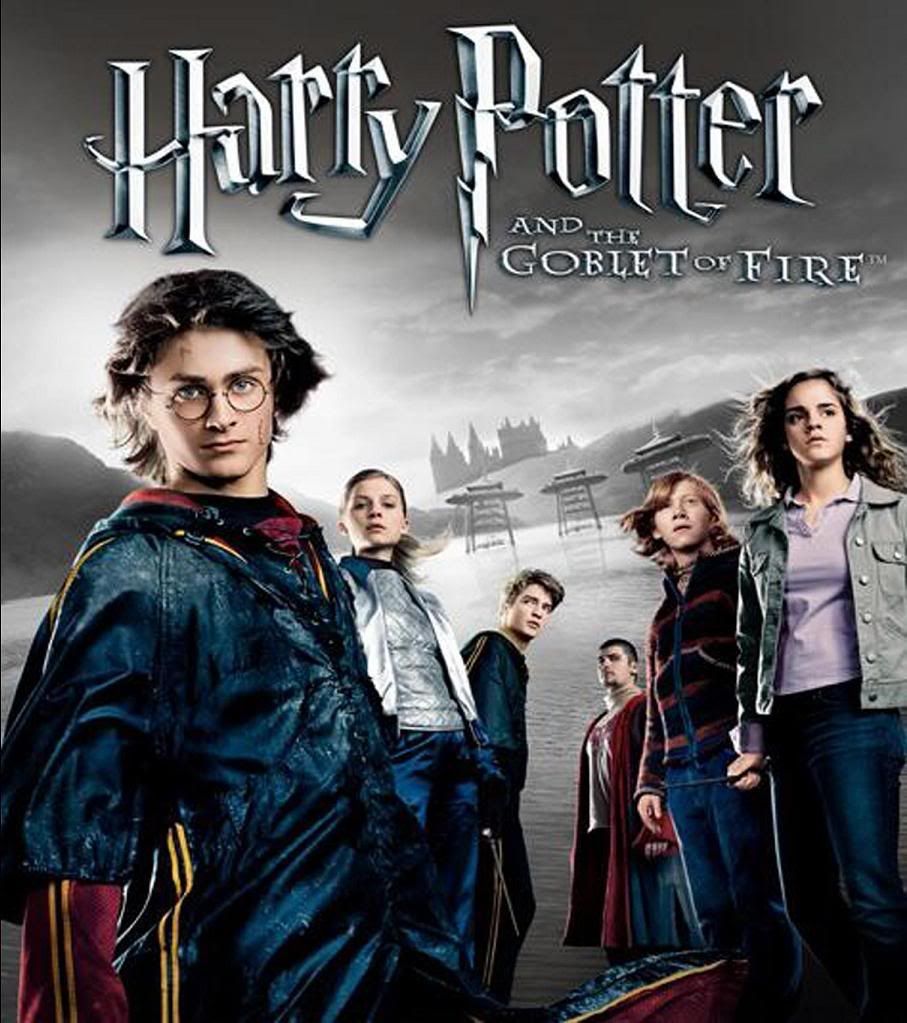
Harry Potter and the Goblet of Fire is an odd one for me - the book is my least favourite of the series, but the film is my favourite of the films so far.

Being annoyingly serious for a moment, I can't stand the house elves sub-plot in the book, because I don't think slavery is a suitable subject to play for laughs. All of Ron's justifications for enslaving the house elves - that they like it, that they were born to serve etc - have been used of real slaves by real slave owners, and the way Hermione is treated by both the other characters and the narrator for trying to win rights for the house elves - laughed at and ignored - seems totally inappropriate to me, especially in a book aimed at a young audience.

I don't get the main plot of Goblet of Fire either - why on earth would Voldemort hatch such an incredibly complicated plan to get his hands on Harry, when surely Wormtail could just kidnap him in Hogsmeade? Why would the Triwizard Tournament have such ridiculously unbendable rules in the first place, how could Harry be magically bound by a contract he didn't sign and why didn't the Ministry cancel the tournament when it became obvious that something very dodgy was going on? For me, all of these are worse problems than the question of why Gandalf didn't just fly to Mordor on an eagle in The Lord of the Rings.

But, for some reason, in the film, none of this bothers me! I get swept up in the story and stop worrying about all these things and, best of all, the house elves sub-plot is gone! Patrick Doyle's music is sublime and the film has some really powerful sequences - Harry and Cedric racing each
other to get to the Goblet, Harry nearly becoming overcome with competitive ambition and abandoning Cedric, the entire scene in the graveyard, especially Ralph Fiennes who is amazingly good at playing pure evil (is there anything more chilling than his cry 'I want to see the light leave your eyes!') and, most brilliantly horrible of all, Harry appearing, clutching Cedric's body and weeping, among a crowd of cheering schoolchildren, parents and a brass band playing eerily cheerful music.

Goblet of Fire has the usual mix of Classical, Norse, Celtic and other mythologies, but the bit I'm picking up on today, ironically, isn't in the film. I also have to confess that I haven't read the book in a while and don't have it in front of me - I have several copies of Philosopher's Stone in several languages (including Latin and Ancient Greek) but Goblet of Fire is at my parents' house, so I'm relying on the internet to refresh my memory.

During the third task, in the maze, Harry encounters a Sphinx who asks him a riddle. Sphinxes (body of an animal, usually a lion, head of either a man or a woman) are known from art all over the ancient Mediterranean, including from Egypt, Mesopotamia, Minoan and Mycenean art on Crete and mainland Greece, and later Classical Greek art. In literature, the best known sphinx is the one that harrassed Thebes until she met Oedipus. Oedipus himself is much better known for the later parts of his story, but it is his defeat of the sphinx that gets him married to his mother in the first place (see the pretty decent Wikipedia article here).

The Greek sphinx's riddle is a simple and traditional riddle, in which the words of the riddle need to be understood symbolically in order to produce the answer. The riddle Harry's sphinx asks is a bit different:

"First think of the person who lives in disguise,
Who deals in secrets and tells naught but lies,
Next tell me what's always the last thing to mend,
The middle of middle and end of the end?

And finally give me the sound often heard,
During the search for a hard-to-find word.
Now string them together, and answer me this,
Which creature would you be unwilling to kiss?"
(Thanks to Mugglenet - the editorial here is somewhat out of date, but makes interesting reading.)

The answer Harry gives, correctly, is 'spider'. This is more like a series of crossword clues than a riddle, relying on word play. If this riddle had appeared in an ancient Greek text, it would make no sense at all as soon as it was translated into another language. The last bit is especially odd, as the one creature in all the Harry-Potter-verse that one would least want to kiss is obviously a Dementor. Sure, kissing a spider would be pretty unpleasant and certainly gives me nightmares, but its not a particuarly clever observation.

Its a nice idea to use a sphinx - a suitably scary-looking creature - and a riddle in the maze, playing on not only Greek mythology, but also echoing JRR Tolkien's The Hobbit, which features riddles heavily in what would turn out to be its most important chapter. I find the riddle itself somewhat disappointing though - for several rather better designed riddles, see the aforementioned Hobbit, 'Riddles in the Dark'.


Two enormous sphinxes guard the entrance to some of the Near Eastern galleries at the British Museum. The picture on the left, which unfortunately came out a bit dark, gives some sense of the scale of these - compare the size of the person with the statue.


Harry Potter and the Order of the Phoenix is actually one of my favourites of the books, while the film is not my least favourite, but definitely comes behind 3 and 4. The first time I read Order of the Phoenix I didn't like it - because it was too well written. JKR really excels at describing teenage-dom in all its glory and misery, and just as the Yule Ball (both film and book versions) reminds me of every teenage dance that left half the attendants in tears or sulks, the OWLs in Book 5 are just too well-described.

Explanation for non-Brits: OWLs are the wizardly version of British GCSEs, playing on the old exams taken by my parents that GCSEs replaced - O-Levels, standing for Ordinary Level (hence Ordinary Wizarding Level). Whereas most other sensible countries have 1 set of school-leaving exams, when I was at school we had 2, and now we actually have 3 (I was the in last year group to take old A-Levels, thank goodness). Students can leave school at 16, after taking GCSEs, or can choose to stay and take AS-Levels and A-Levels, and university requires A-Levels or equivalent.

Although I have done many, many exams since and have two degrees with a third hopefully coming up soon, I remember Year 11, GCSE year, as the most horrifically stressful of the lot (closely followed by MA year, FYI). I only took 3 A-Levels, but 9 and a half GCSEs, which is still less than many others do. The worst part was the pressure put on us by the teachers - 'this is the most important year of your life, how you do in these exams will affect your future career, you must study, you must work', etc etc etc. All of that comes across so clearly in Book 5 that I was taken right back to the age of 16 and I hated it. Later, I read it again, put a bit more distance between it and me, and loved it. I do have a bit of a fondness for ridiculously long fantasy books.

The most intriguing use of Greek mythology to me in Order of the Phoenix is the depiction of the centaurs. I grew up with a Narnian view of centaurs - wise, noble, vicious and brave in battle it's true, but absolutely peaceful unless forced to fight. Harry Potter's centaurs are actually closer to the Greek version. Greek centaurs were imagined as, for the most part, a gang of wild, drunken, violent rapists, presented as the opposite of human civilization. There were occasional exceptions, and both Narnian and Potterian centaurs get their astrological skill from Chiron, who seems to have tutored half the heroes of Greek mythology (see Wikipedia again). However, star-gazing aside and leaving out the rape and alcohol parts, Potter's centaurs are much closer to Greek centaurs than Lewis' noble heroes. Like Greek centaurs, they live in the wild forest, in opposition to human civilization (represented by Hogwarts) and whatever it is that they do to Umbridge is, thankfully, left undescribed.

I like the Classical rendering of the centaurs, and I like that they are so different to Narnian centaurs (while retaining the useful divinatory astrological knowledge) but I must admit, I'm always a little disturbed at the way Hermione deliberately leaves Umbridge to their mercy, and that they would have killed Hermione and Harry without Grawp (my least favourite character of all, by the way). But then, Umbridge was pretty nasty, and its a very effective scary set piece.


A Roman mosaic showing a very unusual image - a female centaur. Unfortunately I didn't write down the exact date of this piece. The mosaic is in the museum at Tunis and is therefore probably Imperial or Late, since Carthage was repopulated under Augustus.

Hmm, between anti-slavery campaigns and the woes of the British educational system, that ended up being a rather more earnest blog than I had anticipated! I'll have to find something more light-hearted to look at before tackling Jesus Christ Superstar...

Thursday, May 21, 2009

Harry Potter: Books 1-3


I am going to break Harry Potter into manageable chunks, and cover books and films together unless there's a major difference between the two. So here are some thoughts on Harry Potter and the Philosopher's Stone, Harry Potter and the Chamber of Secrets and Harry Potter and the Prisoner of Azkaban.

The US title for the first book drives me crazy. The Philosopher's Stone was something people actually believed might exist in the late medieval and early modern period - a stone that would turn lead to gold and produce the elixir of life.

Let's get some of the major Latin references out of the way first:

Albus = Latin for 'white'
Remus = one of the two brothers who founded Rome, who were suckled by a wolf
Lupus = Latin for 'wolf'
Vol-de-mort = French for 'Flight of death' (not Classical, but worth mentioning!)
Expecto patronum = Latin for 'I am expecting a guardian'
Oculus reparo = Latin for 'I repair the eye'

All the spells are Latin except for 'Avada Kedavra' (which is from the same root as Abracadabra). I won't list them all here, but if anyone is curious about a particular spell, ask me about it in the comments.

I love Harry Potter. Its not great literature - Rowling's writing is somewhat basic (count the number of times she has to say 'he, Harry' because she hasn't made the subject of her sentence sufficiently clear) and there isn't a single original idea in all seven books, but they're great, fun reads. As I spend all day reading thick and often impenetrable books for work, sometimes in different languages, I find it increasingly difficult to get into fiction books in the evening - it's so much easier to just put in a DVD. But there are no problems there with Harry Potter, the stories are exciting and fast-paced and time spent reading it just flies by.

Contrary to popular opinion, my favourite of the films is number four, The Goblet of Fire, but out of the first three I like Prisoner of Azkaban very much. The other two are fine, the first sets up the world of Harry Potter nicely, but they're a bit... bland.

Book One's Fluffy is presumably inspired by Cerberus, the dog that guarded the entrance to Hades, the Greek underworld (see description here). The name 'Fluffy' is great, but unfortunately what he's guarding isn't anywhere near as exciting as the underworld; just a bunch of supposedly protective charms and spells that three 11-year-olds can get through.

Book Two's basilisk is also Classically named - see Pliny the Elder's description here. The Wikipedia article is also good. The basilisk is pretty cool and pretty scary, though I always think it's cheating to have Fawkes destroy its sight. Still, it's a good scene, and I think Dan Radcliffe first showed some real acting skill in that movie, when he thinks he's dying and tries to persuade Ginny to leave without him - I feel really sorry for poor little Harry at that point!

Professor Snape, in the third film, is absolutely right about the origin of the word 'werewolf' (from the Anglo-Saxon wer, man), though werewolf stories were known in Greece and Rome too (see here and here, at LXI and LXII). The first time I read Book Three, before I started to study Ancient History and before I had done much Latin, I didn't realise Lupin was a werewolf - something I have since become somewhat embarassed about (see above)! I like Prisoner of Azkaban a lot - as a book, its one of my favourites. I was genuinely surprised by some of the plot twists and Rowling's treatment of lycanthropy ('werwolfism', from the Greek) as an illness puts an interesting twist on an old tale.

The use of Latin for the magic spells in Harry Potter is similar to its use for the same purpose in Buffy the Vampire Slayer. Latin is old, and therefore mysterious. Its also a language that relatively few people can really read, but that a lot of people know little bits of. A lot of us, for example, known the meaning of a motto that we've come across in Latin (like that of the RAF, Per Ardua Ad Astra - Through hard work to the stars). Anyone who's Catholic or who has enjoyed classical Catholic music, like a Requiem Mass, will have heard some Latin. So its an old mysterious language, but one that, at the same time, sounds familiar and which has some words that are almost recognisible - like 'oculus', eye, in 'oculus reparo', the spell to repair spectacles. This makes it especially effective as a magical language. The fun thing for me is translating the Latin spells back into English!


Me at my MA graduation, wearing the Gryffindor House scarf I knit myself and looking very Hogwarts, I think!

Next up: Monty Python's Life of Brian. More Harry Potter to follow at a later date!