Showing posts with label Dreams. Show all posts

Tuesday, May 31, 2011

Rome: Kalends of February


I was wrong in my last review; it turns out that, somewhat counter-intuitively, this actually is the episode in which Julius Caesar gets murderlised. There is a reason for this - it's on the Kalends of February that, in the Rome version of events, Caesar announces he will be creating a hundred new senators, which proves to be the final straw for the conspirators and, indirectly, the downfall of Niobe. In real life, Caesar would have filled the vacant seats in the Senate (caused by all those messy civil wars) much earlier than a month before he died, but we probably shouldn't let that bother us.

As the episode opens, Dodgey Soldier and The Godfather (formerly known as Boring Soldier) have become minor celebrities, thanks to their dramatic exit from the arena last week. Dodgey is still recovering from his wounds, but The Godfather is busy having it away with his wife in front of an audience as part of a truly peculiar ritual on their new land while she expresses surprise that Caesar (who has just given them the land, hence the ritual) might be a bit put out that The Godfather took it upon himself to rescue a condemned criminal.

Pullo makes a bid for freedom from the 'hospital' (I'm pretty sure the Romans didn't have those) and is brought back to The Godfather's house to make even more of a nuisance of himself. Niobe catches Eirene holding a knife to this throat and points out this would not end well for Eirene herself, who would definitely be the prime suspect if Dodgey were to be found murdered. She then orders Eirene to look after Dodgey, possibly as some kind of punishment? It doesn't make much sense. Eirene spits in Dodgey's food. Good for her.

Caesar has decreed that a hundred new senators will be created and tells The Godfather that he will be one of them. Caesar did fill vacant seats with his own supporters, including centurions and men who'd fought for him, but as I said, I suspect he did it a lot earlier than a month before his death. The reason for the placement of The Godfather's promotion here, of course, is to tie his and Niobe's story to Caesar's for the finale. The Godfather is Caesar's most feared bodyguard, thanks to his antics in the arena, so the conspirators have to get him out of the way, so they spill the beans about Niobe's affair to him just as they're murdering Caesar. It's an ingenious way of tying the stories together (even if it is a bit reminiscent of Carry of Cleo in the set-up) and works rather well, and according to Cassius Dio Caesar did have a bodyguard of knights and senators. The only minor problem with this is that it does mean one of the more fascinating aspects of Caesar's personality and behaviour towards the end, his supposedly casual attitude towards the possibility of his own assassination, has to be left out, which is a shame.

We are reminded of Caesar's close relationship with both Antony and his slave/freedman (never have quite worked out which he is) Posca which will make the scenes of Posca trying to save Caesar and Antony finding his body that much more poignant. I particularly like Caesar and Antony's exchange, in which Antony wants to know why Caesar trusts him. Caesar tells him 'If you were going to betray me, you'd have done it long ago' and Antony replies 'Don't think I wasn't tempted,' which is a nice reminder of how ruthless they all are while also, strangely, reinforcing Antony and Caesar's mutual loyalty.

I'm delighted to see Calpurnia's ominous dream get reasonably full treatment - we don't see the dream itself, but her concern and Caesar's dismissal of it as just a dream feel both sweet and true. Brutus and Servilia, meanwhile, are attempting to gain the favour of some god or other for their assassination attempt, in a slightly odd scene that seems intended to be generally portentous.

Dodgey goes out to get a prostitute/floozy/one-night-stand but sends her away when Eirene spots them heading into the house together. Miraculously, from this point on, Eirene softens towards him. Yes, girls, when a man has brutally murdered your lover, all he has to do is refrain from sleeping with a prostitute in front of you and you will find yourself suddenly drawn to him, so eventually all will be forgiven. (Please note all readers of any gender: This Is Sarcasm).

The conspirators and Cicero stand symbolically high up and sneer at the new senators, while Caesar waves at them, looking like he knows something's up. Later on, they discuss the knotty problem of getting The Godfather out of the way for the main event without killing him and therefore making themselves unpopular. Brutus insists on the importance of killing Caesar on the Senate floor because this somehow makes it honourable and not murder, which is especially ironic given that Caesar wasn't killed on the Senate floor, the Senate were meeting in the Theatre of Pompey that day and he was killed there (underneath the statue of Pompey, as depicted in Shakespeare's version).

Niobe and The Godfather have a sweet bedroom scene together because Niobe is Doomed and this is Poignant and Tender. Servilia sleeps alone because all her lovers realised what a psycho she is and left her. She suddenly remembers that she knows all the gossip about The Godfather because Octavia told her, having heard it from Octavian during their secret-swapping, and that this may prove useful in getting him out of the way. She then invites Atia and the kids over for Murder Day, while Dodgey tells Eirene he's going out to a shrine to ask for forgiveness and asks her to come with him. Eirene does, because she's clearly insane.

The town crier (who, by the way, uses the most fantastic gestures which I assume come from Quintilian's description of the gestures used in legal speeches) informs us that the Senate is in session and the plinky-plonky Music of Doom informs us that Sh*t is About to Go Down. Some old woman claiming to be working for Atia comes up to The Godfather and tells him the truth about Niobe's baby and he runs off in a fury, leaving Caesar to the knives. Mark Antony is also dragged off and Posca can't go into the Senate anyway.

Caesar's murder finally gets under way, starting with a remarkably undignified scuffle but carrying on in suitably bloody fashion while Brutus watches with his mouth gaping open like a fish. Finally, Cassius shoves a knife into Brutus' hand and forces him to put the last cut into a dying Caesar. Caesar, having received multiple wounds to the lungs, says nothing, though he does give Brutus a rather heartbreakingly sad look. He then pulls his toga over his head, which is both historically accurate and genuinely sad.

I can see why the writers decided to leave That Line out. Saying it in Latin would sound daft because very little Latin is used in this series. Saying it in English means having to choose between Shakespeare's 'Brutus' or Suetonius' teknon, which could be translated as 'child', 'boy' or 'son', words which all have different connotations in English. Not all ancient sources attribute any last words to Caesar at all so it's perfectly acceptable to assume he said nothing (especially given all the stab wounds in the chest area). The scene is also rather effectively played so that you can almost hear Caesar saying The Words as he stares at Brutus, even though he doesn't actually say them. I have to confess, though, that if it were me, I would have had him say 'And you?' (leaving out the vocative 'Brute?'). Those words are just so expected, thanks to Shakespeare, that it's almost disappointing not to hear them, or some of version of them.

We interrupt this assassination fallout to return to Niobe and The Godfather. He rants and rages and waves a knife at her. She tells him she thought he was dead and promptly throws herself off the balcony. Since Niobe was one of my favourite characters, this is rather upsetting, but story-wise it works. We suspect The Godfather would never actually have stabbed her, but he had the legal right to do so and presumably she was also motivated by guilt and worry about their future. The first time I saw it, I was torn between feeling that this was a suitably tragic and dramatic end to this particular plot, and worrying that I wasn't remotely interested in The Godfather (formerly known as Boring) without Niobe.

Cassius gloats over Caesar's body and Brutus continues to look like someone just ran over his puppy, as if he can't quite believe what he's done. Mark Antony makes it in to the historically inaccurate scene of the crime, sees the body, and backs away, looking angry, sad and probably a little bit nervous as well, though none of them go after him.

Servilia explains all this to Atia as if it were her personal triumph over Atia and nothing to do with dictators or politics at all (perhaps she's right). She also informs Atia that she's going to make her suffer, presumably blissfully unaware that Caesar adopted Octavian in his will and she will, therefore, come to regret this bit of crowing quite a lot. Octavian is certainly not impressed with this turn of events.

We see The Godfather cradling Niobe's body and looking at the unfortunate toddler like he doesn't know what to do with him, which he probably doesn't (the child actor here looks impressively like Niobe).

And after all that fantastic drama, what do we finish on? Dodgey and Eirene walking away from a roadside shrine, hand in hand. I suppose it's nice to end on a more peaceful image, one that's about forgiveness and love rather than death and destruction, but it's a bit frustrating after such a fantastic climax to end on the one note that, for me, really doesn't ring true.

This is a great season finale, which ties up Niobe and The Godfather's story nicely while leaving the historical story on a note that certainly represents an ending, but also creates something of a cliffhanger, as Mark Antony walks away into Shakespearian fame. The double climax of Niobe and Caesar's deaths is very effective and the decision to deal with Caesar first and Niobe second works as well - the audience know what happens to Caesar, so his death is dramatically satisfying but without the thrill of the unexpected, ensuring that Niobe's quieter death has maximum impact, as the audience have no idea what it going to happen to her, so her story keeps their attention even after the big events at the (inaccurate) Senate have taken place. The acting all round is great and of course it's a necessary shame to see Ciaran Hinds' Caesar go, he was brilliant in the role. James Purefoy as Mark Antony is probably the most impressive, in his combination of calm, anger and distress conveyed entirely through a facial expression, but Hinds' dying moments are also tragically beautiful. For me, the only shame is that Dodgey and Eirene's story, which I find peculiar and totally implausible, has to intrude on an otherwise excellent finale, but on the upside it does give us a prettier image to go out on, ready for more blood and guts in season two.

Saturday, May 28, 2011

King Arthur: Stories of the Knights of the Round Table (by Vladimir Hulpach)


When I was little, I had a couple of big compendium books I really loved. One was A Treasury of Literature for Children, which was a collection of excerpts from longer novels and poems (the story of Rikki-Tikki-Tavi from The Jungle Book, an extract from What Katy Did, 'A Smuggler's Song' and so on). King Arthur: Stories of the Knights of the Round Table, a collection of various stories relating to Arthur and his knights, was the other.

When I read it, though, I always skipped the first chapter. The second chapter told the story of Merlin's childhood and the third finally got to the birth of Arthur (and therefore, to me, the interesting bit) but the first explained how the kingdom of Britain was, in fact, founded by Trojans. This chapter, I'm afraid to say, did not interest me at all!

The story given in the book (which I presume became attached to Arthurian legend somewhere in the medieval or early modern period, though I don't know when) is that Ascanius' grandson Brutus was exiled after accidentally killing his father and was led to Britain by Artemis through a dream. However it got attached to Arthurian legend, the intention is clear - to make Arthur a great Classical hero as well as a British one and to tie the Britons, like the Romans before them, to Homeric legend. Julius Caesar's invasion of Britain is reimagined as a meeting of ancient kinfolk and Arthurian legend is made part of a larger Classical story.

This only means anything, though, if you are already familiar with Classical mythology and can enjoy drawing links between the two systems. I didn't know anything about Classical mythology as a child, so, being an obstinate child, I wasn't interested in it. This problem is compounded by the fact that the story is taken right from the Trojan War to the founding of Britain, through Aeneas, Ascanias, Silvus and Brutus, and the story whizzes through the whole of the Aeneid and more in a few hundred words, leaving no time to get to care about any of the story. Plus, the only thing I did know about Classics at the time was that Brutus killed Julius Caesar, so I was also really confused.

Going back to it as an adult, the chapter still feels a bit rushed, but works much better. Artemis, orders given in dreams, people accidentally shooting relatives and going off to found new kingdoms all seems much more familiar to me now and the tying together of the two mythologies is quite fun. I've no idea if this book is still in print, but I'm glad I still have it - it's beautifully illustrated by Jan Cerny and I always enjoyed its retellings of the Arthurian legends as a child. I'm glad it includes the Classical sections as well, as I can really appreciate them now - no more skipping Chapter One!

Thursday, March 3, 2011

Chelmsford 123: Heads You Lose


The second series of Chelmsford 123 brought a few changes - a new, more arty opening sequence, no Gargamadua (thank goodness) and a new blonde hairdo for Aulus. This opening episode is largely notable for featuring Chris Langham, the actor formally known for The Thick of It before his imprisonment in 2007, and Geoff McGivern, the original voice of Ford Prefect, in his new recurring role of Wolfbane.

As the episode opens, the sheep-shagging, bearded emperor is confirmed as the chronologically correct (though no doubt spinning in his mausoleum, as he never touched a sheep in his life) Hadrian, and he has ordered Aulus to organise the building of his famous wall, which Aulus feels is a waste of time because the Caledonians are famous for their ladders.

The most successful parts of this episode are those that combine post-modern playing about with actual knowledge of the Greco-Roman world. Aulus, for example, is struggling with authority issues and calls in a psychologist who, as a Freudian, is a good 1800 years ahead of his time, but, as a Roman period physician, is appropriately dressed as a Greek (most physicians were Greek or trained by Greeks). After Aulus has condemned Badvok to death for repeatedly breaking into his office, Wolfbane tries to persuade Aulus to let Badvok off by pretending to appear to Aulus in a dream as the Ghost of Next Week. This is quite a nice combination of Dickens' beloved A Christmas Carol and the genuinely Greco-Roman recurring trope of people being persuaded to do things by ghosts or gods in dreams.

One other example is, however, perhaps a little forced. Wolfbane, who is Welsh-sounding and appears to be a druid, tells Badvok at length the details of Roman mythology relating to the afterlife, which seems very odd - but this is largely so they can make a then-relevant joke about how the powers that be have been talking about building a tunnel under the Styx for years (the Channel Tunnel was still in the planning phases when this episode was made).

Overall, this is a pretty forgettable episode, and a somewhat disappointing start to Series 2. The episode ends with Badvok's execution and a voiceover joke about how the part will be played by Bonnie Langford from now on, but this is revealed to be a dream of Grasientus' at the beginning of the following episode. Exactly how much of this episode was supposed to be Grasientus' dream is unclear, but Badvok is alive, well and free when we next see him, so presumably quite a lot of it. One can only conclude that McGrath and Mulville had watched a bit too much Dallas before writing this one.

Tuesday, January 11, 2011

The Matrix (dir. Larry and Andy Wachowski, 1999)


I have often felt mildly disappointed that, since I was doing my GCSEs at the time, I missed out on the chance to see The Matrix for the first time in a cinema. It might not look so impressive now, but back in 1999, I can still remember how blown away I was by Neo bending backwards to avoid bullets in slow motion (followed by Trinity's equally satisfactory concluding note, 'Dodge this!'). The Matrix was a game-changer in the field of special effects, but more importantly, it also had a strong, compelling story filled with equally strong characters, both male and female, which made it a stand-out film in a really good year (which also included The Sixth Sense, The Mummy, Being John Malkovich and one of my favourite films of all time, Galaxy Quest. We won't hold The Phantom Menace against it). I am, therefore, restricting myself to discussing only The Matrix itself in this post - the two sequels, while maybe not quite as bad as you remember, definitely lacked something, possibly coherence.

The Matrix blends a lot of different elements into its mix, including at least two different mythologies - I say 'at least two' because I know there's a strong Asian influence on the film, but I know next to nothing about Far Eastern (as opposed to Near Eastern) mythology. The two biggest Western influences, though, are clearly Greco-Roman and Judaeo-Christian mythology. Judaeo-Christian mythology might be said to be the biggest influence of all, since it provides the story (guy dies, comes back from the dead, saves the world) as well as various other smaller references (Trinity, Zion, the ship named Nebuchadnezzar after the biblical dreamer, the thematic exploration of faith and doubt). Greco-Roman myth, however, has an important role to play as well.

Keanu Reeves - another one of those things (or in this case, people) I will not hear a word against. I actually think he's pretty good in Much Ado About Nothing.

Like most of the names in the film, Morpheus is significant - a Roman god of dreams. Ovid (in the Metamorphoses) describes Morpheus as one of three sons of Sleep, who is particularly skilled in imitating human shapes. This specific definition is, as far as we can tell, an addition of Ovid's, but it certainly works as an allusion in the film, which is full of intelligent computer programs that look like people. The human Morpheus as god of dreams is a little off - surely Morpheus is the character who wakes people up?! - but the dream analogy is interesting. Like Inception, Through the Looking Glass and What Alice Found There and countless episodes of science fiction shows (Red Dwarf's 'Back to Reality', Voyager's 'Waking Moments', The X Files' 'Field Trip' and Buffy's 'Normal Again', to name just a few) the film problematises reality and questions how we know what's real and what isn't. Intriguingly, as far as I can tell, this appears to be a modern problem. Apart from Ovid (who questions whether Love really appeared to him in a dream in a letter from exile, and who just has to be different) and contrary to some nineteenth century academics who thought the ancients couldn't tell the difference between dreaming and reality, ancient writers are generally pretty clear whether someone's dreaming or not. They compare things that happen to dreams and they describe things that happen in dreams, but they don't include the sort of trope we see here, where people aren't sure whether they're dreaming or not and can't tell the difference between dreams and reality. I wonder if this new sub-genre has something to do with developing technologies, from the photograph to virtual reality...

The most significant Greco-Roman element in The Matrix, though, is of course the Oracle. From a Latin word, this means a shrine where a god answers questions, usually about the future, often through a human intermediary. The Oracle quotes the famous phrase that Pausanias said was inscribed in the temple at the Delphic Oracle, 'Know Yourself', which she also has painted above her door. The phrase, in this context, refers to the need to be sure what you're asking and what the answer really means, so you don't get caught out like Croesus of Lydia (the one who was told he would destroy a great empire, but the Oracle failed to specify that it would be his own). It is perfect for the film, since Neo (and Trinity as well) can only fulfil the prophecy by knowing himself and it is his and Trinity's understanding of themselves that is the only thing that can reveal that he really is the One.

The inscription at Delphi, however, was, of course, in Greek (γνῶθι σεαυτόν) whereas the Oracle's painting here is in Latin (nosce te ipsum, given here in a shorter form, temet nosce). As ever, I am left wondering whether there is any great significance to the Latin - did some medieval poet mention it in Latin? Is from Dante's Italian somewhere? - or whether, more likely, this is the usual acute research failure that assumes that everything ancient is Latin. This is a rather depressing situation and must be enormously frustrating to modern Greeks, given that there is actually a fair bit more surviving literature from the ancient world in Greek than in Latin. This particular case is made even worse by the fact that at least one of the Latin authors who mentions it (Juvenal) uses the Greek when he does so. I can only assume that, because Latin is perceived to be easier and therefore taught more often (actually I find Greek easier myself) and because Latin is still used in the Catholic Church and in choral music and is therefore very much still around, Latin is the default ancient language that most people are familiar with, so Latin is what they use. The writers of The Matrix must have known this inscription was originally in Greek, since they'd done enough research to know it existed, so perhaps they thought Latin would be more easily recognisible, and didn't want to further the confuse their audience in an already potentially confusing film by throwing an unfamiliar alphabet at them.

Language quibbles aside, though, the use of the Oracle in The Matrix is really rather good and much closer to ancient oracles than most modern versions. Modern oracles in science fiction and fantasy tend to tell the protagonists what is going to happen, either directly or indirectly - and then it does. In The Matrix, however, what happens, happens at least partly because the Oracle told them what she told them - lampshaded early on when she points out to Neo that what will really bother him is whether he would have broken her vase if she hadn't told him not to worry about it. This is the sort of oracle we read about in Herodotus and in Greek tragedy, the sort that complicates the issue because a lot of the time, the situation would never have come about without the oracle in the first place (as with the unfortunate Croesus, and in the story of Oedipus, who would never have killed his father or married his mother if they hadn't exposed him in an attempt to avert the oracle). The way the Oracle's advice causes a chain of events that leads to the implied result is very Classical, and makes this particular oracle a lot more interesting than your average sci-fi soothsayer.

There's probably a lot more I could say about The Matrix, Classical or otherwise, not to mention the other two films, but that will have to wait. What I think this really reiterates, though, is that, just as Inception proved again this year, it is far from impossible to create a big budget sci-fi epic that is built around ideas, not explosions. Well, ideas as well as explosions. And guns. Lots of guns. The Matrix succeeded, not because of bullet time (impressive though that was) or even because of the guns but because of the story, told with plenty of humour, the characters and the ideas that really got us engaged and interested. Hopefully there will be many more equally thoughtful blockbusters in the future!

Friday, August 27, 2010

How to Mellify a Corpse (by Vicki Leon)


This post represents one of my occasional forays into popular history, rather than popular fiction. Like the Horrible Histories series, How to Mellify a Corpse collects some of the most fascinating and unusual pieces of information we have about the ancient world and presents them in a witty and informal text, though this book is designed for adults, not children (there are fewer cartoons, but there are some humorously labelled pictures!). The book is written in American vernacular – I have the American edition so I don’t know whether this has been edited a little for other countries – which gives it the pleasantly informal feel of a lively seminar (although I would rarely commit such thoughts to writing outside of this blog, I have often described various characters in ancient history in similar colloquial and not always entirely flattering terms to those employed here).

The subtitle of How to Mellify a Corpse is ‘and other human stories of ancient science and superstition.’ The word ‘science’ could be expanded to include technology and philosophy, as the book covers all these aspects of ancient ‘scientific’ thinking, and it is in these sections – which I think form a small majority of the content of the book – that León really shines. The Introduction explains straight away that the word ‘science’ was not used in the ancient world, and the concept as we know it did not exist, but the book explores what we might term ancient scientific thinking, and does so in a thorough and thoroughly engaging manner. Since this is a popular history book, precise references are not given, but León nearly always explains broadly where the information comes from and in the case of ancient authors, it should be possible for the very interested to explore each section further for themselves (archaeology is a little more tricky, but the reader does always know whether they’re looking for archaeology or written sources, so they have a place to start).

Perhaps the best sections of all are those in which León introduces us to most of the major philosophers of the ancient world. There is a strong narrative element to these sections, as León describes each philosopher in unashamedly broad and often judgemental terms (‘geek’ is one of the milder ones!). These, while clearly personal and biased one way or the other, give the reader a clear and immediate picture of the personality of the philosopher concerned (and for once, León being the author of the ‘Uppity Women’ series, these are not all necessarily male). This technique allows the writer to create a narrative of the history of the philosopher that takes into account the various thinkers’ personal prejudices and foibles and that is comprehensible and, most importantly, interesting to a read. Each philosopher’s life history, relationships and major thoughts, theories or discoveries are described and León always makes sure to inform the reader whether we know the philosopher in question from his own works or those of others. These sections present a beautifully engaging introduction to ancient philosophy which could relatively easily be followed up on by anyone wanting to know more.

Equally impressive are the book’s descriptions of ancient technology in action. Although, thanks to the wide-ranging nature of the sources, these cannot always provide such precise information on the nature of the evidence, they present a vibrant picture of life in the ancient world, allowing the reader to learn about both the better known aspects of daily life, like make-up and gladiatorial arenas, and the less well known, such as the corpse-mellification (preserving it in honey) of the title. My personal favourite, because I once spent a summer cataloguing the cement library at RMC (Ready Mixed Concrete) Rugby, was the excellent section on Roman concrete.

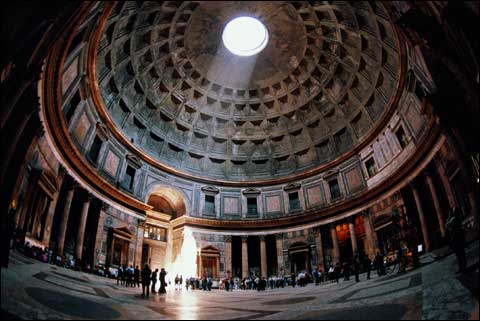
The Pantheon in Rome, a masterpiece of ancient design and concrete

One other aspect of the book that I, as a Classicist, particularly appreciated was León’s careful and precise attention to language. Going well beyond the usual descriptions of how the English word ‘geography’ derives from the Greek words for ‘earth’ and ‘write’ and so on, León includes many references to the precise vocabulary of the ancient world and to the meaning of each word in context for the Greeks and Romans, as well as pointing out common English derivations. This also provides an excellent foundation for anyone who wants to study the subject further.

(Though, while I'm on the subject of language - the book translates the name 'Heracles' as meaning 'the glory of Hera' and describes this as a 'puzzling non sequitur'. For anyone who's interested, the name is more usually understood as meaning something like 'glory because of Hera', or words to that effect: Heracles gained his great fame and kleos, glory, because Hera made his life so miserable and, directly or indirectly, forced him to perform so many glorious deeds).

Just as the ‘science’ side of the book covers science, technology and philosophy, the ‘superstition’ side covers religion, superstition and myth (which I am defining broadly as stories with a religious element for the time being, for simplicity’s sake). Whereas many of the ancients would have been equally likely to lump all the ‘science’ subjects together, eliding the differences between religio, superstitio (very different concepts in antiquity, though the dividing line can be difficult for modern scholars to draw) and myth does present a slightly distorted picture of ancient ideas about the world, particularly if the reader comes away with the idea that literary myth inspired the same sort of ‘belief’ as, for example, adherence to ancient methods of divination. However, this is perhaps inevitable, since the whole concept of ancient ‘belief’, so very different to and more pluralistic than the dogmatic religions best known in the western world today, is quite spectacularly complicated and it is not the purpose of this book to get into an academic debate about the nature of ‘belief’ (Paul Veyne’s Did the Greeks Believe Their Myths? is the place to start on the complexities of ancient ‘beliefs’).

The book also follows the current popular trend of describing ancient ‘science’ as something held back by religion and superstition, and tends to describe most beliefs and ideas as subscribed to by nearly everybody. This is somewhat contrary to the position I take personally – I tend more towards the argument that the extent to which people do or do not ‘believe’ in various ideas, particularly those on the more superstitious end of the scale, has not changed as much as all that, despite the rise of the concept of atheism (which was a very minor belief in the ancient world – Lucian lumped atheists as a minority group in with Epicurians, who had pretty similar ideas, and Christians – to an ancient thinker, abandoning the traditional gods for a single deity was in the same broad bracket as atheism!). You can read my thoughts on the subject in more detail in the conclusion to my PhD thesis, which is freely available online here (do skip to the last couple of sections of the conclusion, unless you’re very interested in ancient dreams!). However, the argument León follows is an entirely valid academic argument and, indeed, one of the more popular around at the moment – the fact that I like to be awkward does not detract from the meticulous research that has gone into the book.

Mellify is indeed meticulously researched, and introduces a wealth of material from across the ancient world. The book is divided according to geographical area. Although this has the disadvantage of disrupting the chronology of the narrative (again, unfashionably, I have a fondness for chronological arrangements!) it has the great advantage of providing a real sense of place and of the subtle differences in the cultures that surrounded the ancient Mediterranean. Since it can be far too easy to divide the ancients into very basic categories (Greek, Latin-speaking, Egyptian and so on) this gives the book a welcome extra dimension and enriches the picture of the ancient world that emerges.

Pythagoras again. I like him. Even though he made my life a misery in maths class.

In this book, León has compiled an eclectic mix of the most outrageous, exciting and generally interesting stories of the ancient world. In most cases, those that seem really unlikely are flagged up (in the best tradition of Herodotus, who is covered with perfect balance under both his titles, ‘Father of History’ and ‘Father of Lies’) and in some cases, León offers tentative guesses about the truth of the matter that, while hard to impossible to back up with evidence, are nevertheless fascinating and entirely plausible – it had never occurred to me that Pythagoras might simply have been allergic to beans! The book gives plenty of background to the historical places and periods it covers, and each chapter explains who it is talking about and their background even if they have appeared before, so the themed sections can be read out of sequence it you want to. A very enjoyable read!

Tuesday, August 3, 2010

Spartacus Blood and Sand: Old Wounds


Bad news I'm afraid - I'm away for two weeks this month and will miss the last two episodes of Spartacus! I'll record them and review them as soon as I can after I get back later in the month. And, while I'm distracted, some better news: I have a new non-academic (very light-hearted) article in Discworld Monthly this month, on the various levels of fantasy and reality in the Discworld.

Drill Sergeant Guy tries to comfort Spartacus over the death of Neighbours Reject while distinctly Gladiator-like music plays in the background. Aurelia, unsurprisingly, isn't in the mood to be sympathetic, but the whole thing is so sad that even John Hannah feels sorry for Spartacus.

Our ancient word of the week is Greek this time - hubris. Though I guess that one's moved into English, really.

Crixus is upset because Spartacus will fight in some Games against Pompeii - or are they Games of Pompey? Their pronunciation is hard to make out! - that he'd been looking forward to, which sort of reminds me of that bit in The Devil Wears Prada where Anne Hathaway gets to go to Paris instead of Emily Blunt. That's probably just me, though.

Spartacus is hanging around in the hope of supporting NR's wife and family, which is surprisingly sensible and noble of him, though you can bet your freedom that John Hannah isn't actually sending her the money. He's still being rather harsh to his girl-friend, who is servicing a man who, Spartacus believes, was wounded protecting his wife. JH, meanwhile, is having fun torturing the white-haired politician whose son was the cause of all the trouble. One of these days, some magistrate or other legal person is going to notice the number of (often freeborn) dead bodies that pile up around him, and he's not an emperor, there's no reason the family of one of them shouldn't take him to court. If any of them are alive, that is.

White-haired guy prophesies that when Spartacus falls, JH will follow, which is probably true. He's so far gone that even nasty goatee guy is starting to doubt that this is a good idea. Meanwhile, our unfortunate hero is seeing ghosts again, though Neighbours Reject has replaced his wife for the time being, and his wound from the fight last episode is not healing and he has a fever. It's good news for Crixus though, who gets to play champion again and who has taken to saying foolish things like 'tonight I am a god!' He'll be planning to make a horse a senator next, just wait and see. Crixus is very confident - 'He's doomed!' observes Mum.

Beardy gnomy goatee guy has sold John Hannah out to, um, a different white-haired guy? Yeah, this one's a merchant I think. Mum observes that you can't trust a soul in this programme (I think I need to show her Rome and I, Claudius again...).

There's a rather cool dream sequence which unfortunately I had to keep looking away from because I'm very squeamish. Spartacus pours coins from his wound while Neighbours Reject watches and his wife - identifiable by the fact she's one of very few brunettes on this show - approaches masked, then collapses and dies on him (again). His female friend, who's nursing him, is a brunette as well, which is probably not a coincidence.

Oooh, some more arena action, goodo (except I'm not actually looking at most of it, just listening to Mum say 'Eeee!' and 'Ohh, erugh, oh!'). We meet a rather fun new character who may or may not be called Pompey - no, wait, I think they are referring to Pompeii after all (and this definitely isn't the famous Pompey, who wasn't that... generously built). The absence of the white-haired politician has been noticed, especially since his son is right there. Politico is not as dumb as he looks, as he plays dead and then bites one of his captors, who happens to be the minion who was there when Spartacus' wife was killed, like a vampire, though this doesn't actually do him much good, other than to leave him alone with gnomy guy.

I like the trumpet-y things played at the Games - no idea what they are but they look very cool. They're playing because it's time for Crixus to fight Pericles, the Primus of Pompeii, and Crixus has to learn what every inhabitant of the Big Brother House has learnt - that if you disappear from the public eye for five minutes, they will forget who you are and boo when they see you. The CGI on these scenes really is very good, it's not seamless but it's a pretty convincing picture of an arena - no restricting this show to shots of a few people in a box with some sound effects behind them.

It's not looking good for Crixus, and things get worse when his fan club - Xena and his girlfriend - are ordered back to the villa, denying him the chance to share his victory with his girl(s). Luckily, sheer indignation (and a pumping rock soundtrack) gives him a second wind and he guts the other guy (literally). And smashes his face, just for good measure. The crowd love him again, but he's bloodied and his girlfriend is not there - this does not please him.

John Hannah has news of an attack on Politico brought to him and takes the irritating teen off with him, supposedly to help. Gnomy guy tells the white-haired merchant where Politico is, but it's starting to look like this is another double-bluff of Batiatus', since he ushers the merchant on a solo rescue mission.

(Ad break - Batiatus encourages us all to go to the Co-op and buy olives).

The minion who was there when Spartacus' wife was killed is now in the infirmary with him, where the medicus has given him henbane which, thanks to a brilliantly comprehensive poisons list in The Sirens of Surrentum, I know is not a good idea.

Spartacus is still experiencing effectively creepy dream sequences - if there's one thing this show knows how to do well, it's a dream sequence. Spartacus has killed his long-haired Thracian self, who is also Neighbours Reject - deep. Interestingly, these are the sort of dream sequences we would expect to see or experience ourselves rather than the sort of dreams Romans often described - none of these dreams contain prophecies, just the odd hint of unfortunate destiny, nor is Spartacus brought a message from the dead or the gods as might happen in an ancient Roman dream sequence. This, however, is probably the one that comes closest to a Roman dream. Spartacus is told to look by NR and his wife, he sees Batiatus talking to the cart driver - it seems almost as if NR and his wife are trying to make him see the truth. They don't quite manage it, but they make him suspicious.

The whole business with the identical white-haired men does turn out to have been a double bluff, as the spotty teen and guards walk in to discover that the merchant has just murdered the Politico and drag him off.

Spartacus inspects the body of the minion and discovers... no scar! The truth is finally out - when strangled by Spartacus, he sings like a canary. Well, more chokes the truth out with his last breath actually, but same diff. Spartacus shows he has some brains by getting the girl to help him cover up the murder, pretending the bite got infected and killed the minion.

'Behold Spartacus risen from the dead!' says Batiatus as we see Spartacus attacking a practice pole that's distinctly cross-shaped. Subtle. (Because this show is known for subtlety of course!).

'I am myself again!' declares Spartacus, smiling for the first time in ages. Excellent - we should have some quality plotting and escaping to look forward to over the next two weeks!

This was another cracking episode, though of course, with all those dream sequences, I was bound to enjoy it. And the dream sequences were the standout parts of the episode, as we saw our hero use a different muscle for a change - his brain! Unlike an ancient Roman dream sequence, these dreams did not provide Spartacus with any information he did not already have. His wife and friend did not come back from the dead to tell him something, as they might in an ancient novel or poem - rather, in thinking about them, Spartacus came to realise something he already knew, but had been too preoccupied to fully realise. It's a very modern use of the dream sequence, but it works perfectly for this Roman story, and next week's episode, 'Revelations', looks very promising.

Tuesday, July 20, 2010

Spartacus Blood and Sand: Whore and Inception


Has anyone else seen Inception (dir. Christopher Nolan, 2010) yet? It was brilliant - and I think I'd enjoy it even more if I was able to see it a second time, without trying to second guess the plot the whole way through. I'm not sure how much 'pure creation' there is in real dreams - generally speaking, dreams are made up of elements of things you remember, sometimes mixed up together in strange ways. It's pretty much impossible to dream something you have no knowledge of. But still, it's brilliant.

It also features some significant names, some of which seem pretty obvious, others are less clear cut (oh, for a sequel to give us some more answers!). Ariadne has been picked up in most places as the woman who led Theseus out of the maze, which is probably why they went for that, but it's worth bearing in mind that Ariadne was also the woman abandoned on a beach while she was asleep. Like others, I kept mishearing 'Mal' as 'Moll' and wondering if she had something to do with gangsters, but it turns out it's 'Mal' - French for 'bad', 'evil', derived from Latin 'malus', but according to Empire magazine (and verified by Mum) it could also be related to mal'ak, Hebrew for 'messenger' (or 'angel'). Empire also suggested that 'Cobb' might be derived from Jacob, who dreamed of a ladder to heaven.

I also wondered if 'Yusuf' might be related to 'Joseph', who was told what to do in dreams. And King 'Arthur' is said to be sleeping and will wake when England needs him (his absence throughout the 20th century is not explained in legend!). And Micheal Caine's character is called 'Miles', as in 'to go before I sleep', but that's probably taking things a bit far. I keep wondering whether there is a deeper significance to any of these names, or whether Nolan is just messing with all our minds...

Anyway, on to this week's Spartacus.

This episode is called 'Whore' and features full frontal mass female nudity in the first few minutes, so I guess this will be a sexy episode, more than a bloody one (a guess mostly borne out, until the very end). Xena has got as bored of Paris Hilton as the rest of us and is now sucking up to Crassus' cousin, much to Hilton's chagrin. Trouble is, when they're all in their blonde wigs, I find it quite difficult to tell them apart. Xena is much quicker to leap to the lesbian snog in this show than she was in her own. The idea of all Xena's friends coming over to have sex with a gladiator actually does have some basis in historical evidence though. A lot of said evidence comes from Juvenal's satires, which are somewhat exaggerated tirades against anyone who isn't Juvenal, but still, it's something which may actually have happened in ancient Rome, so bonus points for that.

Bonus points immediately retracted for John Hannah randomly having forced sex with a slave - which, as we saw the other week, this programme does not seem to regard as rape, though it is - while having a conversation with his wife, who obviously wasn't in the mood. Trouble is, I was too distracted by explaining this to Brother, who's never seen the show before, that I missed what he was actually saying. (I had warned him that these two are often too lazy to do their own foreplay, and that they have slaves to do everything for him, but he was surprised - and amused - to see that sometimes it isn't just the foreplay that they can't be bothered to do for themsleves). Oh well.

I did like the next scene, which, if memory serves, mirrors a scene from the famous Kirk Douglas film of Spartacus' story, in which a woman (wearing rather more than this one) is sent to his cell to have sex with him and he refuses. I liked the echo of the film, following the 'I am Spartacus!' statement a couple of weeks ago, it was fun to see.

Since when was the gnome-y bearded guy a gladiator? I guess this is why he's so bitter. Is Xena actually bathing in milk of some kind?! I know Cleopatra was supposed to have done that, but I figured it was a story that got exaggerated. I'm not sure why the slave woman didn't just pretend she'd had sex with Spartacus when interrogated, she's not very bright it seems.

Crixus and some new guy have been naughty boys and will be sent to bed without supper. At least Neighbours Reject has seen some sense and calmed down. Xena, meanwhile, continues in her delusion that she and Crixus have some kind of actual relationship. Paris Hilton rather surprisingly looks slightly embarassed about using gladiators for sex, which is unusually human of her.

Xena without her wig is a little bit scary, as is her rage that anyone else might want Crixus, though not as scary as JH saying that soon they will give her a lesson in manners. Neighbours Reject, meanwhile, continues to react in a rather extreme manner to bad news.

I like the all too brief scene between Drill Sergeant Guy and Crixus a lot, where it looks almost as if they might plot against Spartacus. I continue to wonder how on earth Spartacus is going to lead a rebellion when everyone hates him. He's still got Neighbours Reject, of course - as I explained to Brother, they're BFFs. The rather dim slave woman is learning, though still not actually lying, and Spartacus is helping out his buddy, while Crixus teaches his new nemesis a thing or two, so things are starting to look up a bit.

It can't last though. JH seems to have similar tastes to Salome or Caligula, as his slaves have brought him a head as a present, Spartacus is led off to have sex with Crassus' cousin and Crixus goes off on a random jealous rant, only to find his poor girlfriend was flirting with a guard so that she could nick the key and they could finally have sex with each other, instead of Xena or JH. It was nice to see them finally get it together.

At this point, Mum had to remind me of the plot, which I had lost track of, as various double-crossings appear while everyone is wearing masks, along with yet more full frontal female nudity. Paris Hilton thinks she's having sex with Crixus, but it's Spartacus, who thinks he's having sex with Crassus' cousin (which his high morals seem to allow), then the cousin turns up, the masks come off, Spartacus goes mad and tries to strangle Paris Hilton, he is pulled off her, but then she goes mad and kills the cousin by smashing her face in, which is really, really gross. So now Xena and JH have a dead cousin of Crassus on their hands, and yet somehow Paris Hilton is still BFFs with Xena, I think because Xena is covering up her unfortunate murder of the cousin of one of the most powerful men in Rome.

I like the way the show is slowly moving towards actual history - more mentions of Crassus, who will presumably find out about his cousin at some point and possibly think that Spartacus did it, and echoes of the older movie, which isn't exactly historically accurate, but has more history in it than the TV series so far (which is not a criticism, as the series is offering a backstory that otherwise wouldn't exist, just an observation). Spartacus is becoming more leader-like, as he helps out Neighbours Reject, but I'm still hoping for a reconciliation between him and Crixus at some point, they're best fighting together. It's not looking good at the moment though, unless Spartacus can also somehow get Drill Sergeant Guy on side - which, if Crixus' girlfriend reveals what she knows about the death of Barca, might be possible, though unlikely. Here's hoping for more plotting and less really gross face-bashing in next week!

Wednesday, April 21, 2010

The Roman Mysteries: The Enemies of Jupiter (TV adaptation)

I want to read The Gladiators from Capua, but I don't have the book of The Enemies of Jupiter, so I've skipped The Dolphins of Laurentum for now (I'll come back to it later) and decided to watch the TV adaptation of The Enemies of Jupiter so I know what's going on in The Gladiators from Capua. So I haven't read the book and am talking only about the TV adaptation here!

In this story, Doctor Mordecai, unaware that his wife is still alive and a slave to Titus, wants to remarry. Luckily (!) a plague draws him to Rome, where his wife is living.

This story features another prophetic dream, which always makes me happy of course and is thoroughly appropriate for a story heavily featuring Aesculapius, who had a marked tendency to appear to people in dreams. Titus has had a dream about a Pandora's box being opened by a Prometheus, and he believes that it means an enemy of Jupiter will do something that will destroy Rome, and it's this puzzle that Flavia offers to try to solve.

Much of the story concerns a certain important box that one is not supposed to open. Josephus (yay!) tells the children about the Ark of the Covenant, which will be especially fun for any viewers who've seen Indiana Jones and the Raiders of the Lost Ark. I only saw that film for the first time a couple of years ago, and wasn't entirely paying attention, but even I developed a vague expectation that melting Nazis would somehow be involved in this story. I like the identification of the Ark with Pandora's box - this story makes much more interesting use of the Pandora's box story than most, which is lovely to see.

Titus continues to be portrayed as jealous and potentially very dangerous, even more so than in the books I've read, though of course I haven't read this particular one. I like this grey Titus, though sometimes it makes his acts of kindness seem stranger and less natural.

The sections where Flavia, Nubia and Lupus interrogate various doctors are rather fun, since ancient medicine is always good for a laugh if you're not actually victim to it, though unfortunately these sections are rather lost next to the much more important storyline concerning Mordecai and Susannah. Their reunion is genuinely touching, and of course, the television version has removed the unfortunate detail that Susannah left Mordecai for another man - here, she stayed behind to care for her sick father - so he has no reason to be angry, at least until Titus turns up. Titus is, unsurprisingly, Not Happy, and a nice tense scene ensues between the three, which ends up with Jonathan dragged off by guards again while Susannah suffers from poison inflicted by Berenice (who, historically, is the daughter of Herod Agrippa from I, Claudius, by the way).

Should have recognised the bad guy too - he once tried to eat Jill and Eustace in The Silver Chair. (He's a time traveller as well - he already calls the Flavian amphitheatre the Colosseum). That wasn't the only part that reminded me of The Silver Chair - the children are confronted with a brilliantly awful choice when they have to open the box which may or may not be the Ark of the Covenant in order to save Susannah (which, of course, they do, and it's the right choice, but it's a wonderfully horrible moment!).

I loved Lupus knocking out the bad guy with a slingshot - pure David and Goliath. And in this TV adaptation, poor Jonathan himself certainly isn't responsible - not directly anyway - for the (second) Fire of Rome, he's just in the wrong place at the wrong time. The bit where Lupus tries to tell the others where Jonathan is with no voice is also straight out of a nightmare, even if they do realise what he's saying, and very well done. Nubia's musical ability saves the day again too, which is nice.

Flavia is either very brave or very stupid when she decides to tell Titus he and his hubris are the problem, but luckily it works and he lets Susannah go, for he is a goody after all.

The episode ends with Miriam's wedding, which in this version, her mother is able to attend (in the books, Miriam is already married by the end of The Twelve Tasks of Flavia Gemina) so that's nice. In fact, several elements from the un-adapted Twelve Tasks are here, most importantly, Marcus Geminus' desire for Flavia to stop 'running wild' and get married. Only one problem - at the beginning of The Gladiators from Capua, everyone thinks Jonathan is dead! I guess in the book they weren't able to find him in the fire? And Susannah is still with Titus? Hmm, I think a little digging around on the internet is in order...

Edited to add: Looks like Twelve Tasks has been adapted, in series 2 - it's just the wedding and the first mention of Flavia's own marriage that have been moved!

Monday, April 12, 2010

Xena Warrior Princess: Dreamworker


First of all, I haven't managed see Clash of the Titans, which I'm actually quite sad about, coz it looks like big, silly fun, but big silly fun best enjoyed on a cinema screen. Perhaps I will make up for this by eventually seeing on TV with friends and alcohol. However, Cleolinda has done a short parody of it, so here's a link to that in lieu of an actual review!

Anyway, on with Xena. Only the third episode in and it’s an entire episode about dreams, yay! In this episode, Gabrielle is kidnapped by ‘mystics’ who want to sacrifice her to be the bride of Morpheus, god of dreams. Xena must go through a series of challenges in a dreamscape in order to rescue Gabrielle.

The use of dreams in this episode generally has little to do with ancient dream beliefs beyond the use of the name ‘Morpheus’. The dream vision the blind former mystic tells Xena he has seen is most like an ancient dream. It’s a direct vision-prophecy, showing him exactly what would happen, which is unusual but not unknown in ancient texts, and they way he reports and acts on it is reasonably ancient.

The ‘dreamscape’ and the other uses of dreams, however, come not from classical myth or history, but from modern science fiction and fantasy, where the dreamscape is an ideal way of exploring your main characters’ worries, preoccupations and desires. I’m stumped to think of any pre-Xena examples right now, though I’m sure the older Star Trek series (Classic and TNG) can provide some. Post-Xena, Buffy the Vampire Slayer (Restless), Star Trek: Voyager (Waking Moments), Farscape and Stargate: SG-1 have all used dreams in this way. The idea of the ‘dreamscape’ or dreamworld, where living characters can meet and interact even when separated by great distances (used to great effect, for example, in Robin Hobb’s Liveship Trilogy, an excellent series of fantasy books I would thoroughly recommend, but best to start with the Assassin trilogy first) in rarely attested in reality if at all. Various cultures see dreams as a way to meet and communicate with the dead or the divine, but not with other living mortals.

In this case, although Xena is able to meet with Gabrielle to give her advice, for the most part we’re strictly in character study territory, with some of Xena’s dark past, alluded to in the first episode, being filled in, though so far it’s mostly your basic village attacked, forced to kill lots of nasty men story. Scary black-contact-lens Xena, meanwhile, seems to be a projection of Xena’s Jungian Shadow, her dark side which, like all good warrior heroes, she is constantly battling.
Gabrielle is still the ‘innocent’ comic relief and still hasn’t got out of her blue blouse/red skirt combo, at least until she is put into a bridal dress for ‘marriage’ with Morpheus. Xena wears an intriguing purple outfit in the dreamscape, which looks almost Japanese-ish in design – whether this is a clue to her origins or a random decision on the part of a bored costume designer is, at this point, impossible to say.

This episode uses the dreamscape pretty effectively, especially in Xena’s final acceptance of her darker side, and Gabrielle’s enforced use of brain over brawn is nice too, though, presumably, she will indeed have to kill someone at some point during the series – I hope they remember to make something of that when it happens. And she’s still stuck in that peasant costume! Overall, though, I liked it - I'm always a sucker for dream-y episodes and although this one was a bit obvious, it was nicely done.

Tuesday, April 6, 2010

The Roman Mysteries: The Assassins of Rome


There are three basic approaches to writing historical fiction. Historical novels can fictionalise a real event; they can tell an entirely invented story that has an historical setting, or they can fill in the gaps in real events or solve a real historical mystery with fiction. Steven Saylor's Gordianus books nearly always take this third approach, inserting Gordianus into real events or court cases, while Lindsey Davis' Falco books tend more towards fiction, but occasionally include real events or mysteries, often in the background.

One of the most fun things about Caroline Lawrence' Roman Mysteries series is that the series as a whole covers all three approaches, from stories like The Twelve Tasks of Flavia Gemina, which is entirely fictional, to The Secrets of Vesuvius, which is largely based on historical record. This novel uses elements of the third approach. The story is entirely fictional, but the setting is a fictional speculation on a real unknown - what exactly Vespasian and Titus used the remains of Nero's Golden House for. An entirely female community of Jewish slave women is, perhaps, a rather surprising solution, but it is probably fair to say that stranger things have happened.

This book is filled with gorgeous descriptions of Rome, and one of my personal favourite aspects was they way Flavia and Nubia travelled all over Rome in a litter! This may seem a bit weird - let me explain. When I was little, The Horse and His Boy was my favourite Narnia book (well, other than The Lion, the Witch and the Wardrobe) and I loved the whole sequence in Tashbaan, where Aravis rides with her friend Lasraleen in her litter, and I always wanted to do that myself. Now, obviously, this was very un-politically-correct of me. The thing is, when you're six years old and the book you're reading features two talking horses as main characters, you don't really think about the fact that a litter has to be carried by other people, usually slaves. Clearly, being a grown-up, I would never do such a thing, but it is a fun thing to read about and the six-year-old me would have been thrilled!

Of course, another of the good things about these books is that they don't let you forget how awful it is to be a slave. When I was in my late teens and reading Robin Hobb's fantasy series (most definitely not suitable for children) I was shocked when a main character was given a slave tattoo, so I can only imagine how over-sensitive child-me would have reacted to Jonathan's branding here. There is also a pretty clear reference to the rape of an entire city, which may go over the heads of some children (I hope).

On the other hand, some of the details of this story were not as bad as the TV version, which surprised me greatly, since I would normally assume children can take more in a book than visualised on the television. Jonathan's uncle Simeon is not blinded here, but is able to explain himself to the Emperor in time to escape unharmed, and Jonathan's mother assures him that she is not Titus' lover, only his friend. The Emperor comes off rather better and Susannah stays where she is through choice, hoping to influence him. This would have left child-me much, much happier! Josephus also comes off better here, which makes grown-up me happy too.

There's an interesting line about halfway through the book - Sisyphus, the secretary (I kept wondering if his name was significant, but he seemed happy enough!) says 'I'm a Greek, we're not afraid of strong women' - unlike the Romans, who are, especially those from the East. This is certainly true as far as the Romans are concerned, though I think they were equal parts fascinated and appalled by Livia, Cleopatra and the others, and some strong imperial women were greatly admired (Octavia, Agrippina the Elder, Antonia the Younger).

The reference to the Greeks is very interesting. Classical Athens itself was, I think, an awful place to be if you were a woman - rich women were kept inside, allowed out only for religious festivals and funerals, in upper quarters and considered utterly inferior by men (scholarly opinion does vary on the extent to which this was true - personally, I tend to think Athens was a pretty sh***y place to be if you were a woman). Greek literature, however, is pretty ripe with strong women. Clytemnestra and Medea are to be feared, as murderers, but Penelope, Antigone, Electra and Hecuba are all admired. In the first century AD, when the book is set, the Greek genre of the romance novel was taking off, and the heroines in these are pretty strong too. So I think the really interesting point is, would a Greek of the first century AD end up with a view of women that was polar opposite to his forebears, as the original contexts of some of the texts were lost and only the strong, interesting female characters remained? It's certainly something to think about next time I teach Gender in Ancient Rome!

Titus is almost implausibly nice to everyone in this book, but this is tempered by allusions to his behaviour in the past, which I found very interesting. I haven't yet read all of the Falco books, but in the ones I've read, Titus tends to come across pretty well all the time, to contrast him with his horrible brother Domitian. Here, Domitian's brief appearance doesn't reveal anything terrible about him, while Titus, although he has reformed and is behaving very well, is clearly described as not always having been so nice. It's lovely to see these more complex characterisations here. Our heroes do not know that Suetonius will eventually paint Titus as good - though, importantly, only when he was Emperor, not before - and Domitian as bad, so it's good to see them discover this gradually.

The Arch of Titus, commemorating the sack of Jerusalem

I enjoyed this book a lot - it won me over early on with a dream that made use of Penelope's loom, combining some of my favourite themes! And Flavia describing the under-construction Colosseum as 'colossal' made me smile (and yes, the author's note at the back makes clear that the name comes from the statue, not the amphitheatre itself, but Flavia doesn't know that!). It's also clearly set up for a sequel - I'm glad I know that this is not the end of the story, as poor Miriam and Mordecai being in the dark still would be rather frustrating otherwise. The children are sensible as ever, allowing grown-ups to help them and accepting help when they need it, and their use of their musical ability is a nice touch, as this particular skill turns out to be extremely useful.

Tuesday, February 23, 2010

Chelmsford 123: The Girl of my Dreams

Hello again everyone! Back from holiday, which was brilliant and involved hardly any work. (I quite often go to parts of the Roman Empire on holiday and tour archaeological sites, which I love doing and which is partly why I choose those places, but does mean there is an element of work in the holiday. This time, I went to New York City, so I was able to fully enter the 21st century - or at least the 20th - for most of the holiday, except for an hour or so photographing pots and statues in the Metropolitan Museum of Art). Unfortunately, however, the airline have lost my suitcase (after waiting a full day for them to do a two and a half hour journey, they turned up with the wrong one - never check baggage in to KLM). This means I have to wait in for it, which means I can't go and see Percy Jackson and the Lightning Thief in Birmingham this evening, which means I probably won't get around to seeing it until it appears in Blockbuster or on Sky Movies. Sorry about that - my wonderful words of wisdom on it will have to wait.

This episode sees Badvok, Aulus, Grasientus and Functio beseiged in Aulus' villa by an army of furious women who demand a male sacrifice, or they will sit outside until the men starve. The episode tries to get around the fact that this plot is based on the idea that their leader wants to avenge the attempted rape of her daughters by making the daughters very, very ugly, implying no one would want to rape them anyway. (sarcastic voice on) Well, that makes it OK then (sarcastic voice off). This motivation is sometimes attributed to Boudicca, though according to Tacitus' Agricola, rape in general in only one of a number of grievances that led to the revolt. Modern retellings seem to feel the need to explain why a woman is taking arms by making the offence a close personal one - the rape of her own daughters - whereas Tacitus says that Boudicca led the revolt simply because the Britons did not have male primogeniture at the time and leaders could be of either gender, something apparently conveniently forgotten by modern authors.

The episode claims that the story of the fearsome tribe of women (the Silugae) who beseige the men, only to move on when they realise they've got the wrong town, and eventually raze the town they're after and put some man's genitals in a jar, is told in Tacitus' Histories. As far as I can tell without actually re-reading the entire Histories myself, this isn't true - the Histories tell the story of the Year of the Four Emperors. The revolt of Boudicca, which seems to be the inspiration for the episode, is described in Tacitus' Agricola and in Cassius Dio (and the Roman governor who fought was, in fact, Paullinus). It's a shame, because the crack at the end, about how maybe we shouldn't take either Tacitus or Suetonius too seriously, would be quite funny if it was based on a real example. There's also a rather nasty scene where the men prepare to eat Grasientus alive - OK, it's meant to be funny, but it is a bit gross for my tastes.

The best bit of the episode is the first scene, where Aulus goes to a dream interpreter to find out what the horrible blob in his dream means. The dream interpreter inspects the entrails of a goat to try to find out - this is actually pretty accurate, dream prophecies were sometimes verified by extispicy - checking the entrails of a sacrificed animal. The dream interpreter appears to do the New Zealand All Blacks' Haka first, then stabs the goat, which he says establishes that the goat is dead. It's pretty funny. Afterwards, still with no answers, Aulus wonders how he has offended the gods and suggests that perhaps the gods have gone vegetarian and they should be sacrificing carrots, which is even funnier. There's a fairly amusing section towards the end where the men compare war cries (the British 'arrrrgggghhh!' vs the Roman 'Dulce et decorum est pro patria mori') but if only the rest of the episode had lived up to these first few minutes!

The New Zealand All Blacks rugby team, performing the haka

Wednesday, October 21, 2009

The Roman Mysteries: The Pirates of Pompeii/The Assassins of Rome (TV adaptation)


Watched these the other day, while clearing out paperwork in my bedroom (something which took a very long time and involved so much rubbish that the shredder kept packing up and I had to wait half an hour to use it again!)

The Pirates of Pompeii is one of the books I've actually read, so that was a good one to see. It was very well adapted - I especially liked the scene where Felix drives his cart very quickly along the cliff road, and everyone else is terrified, but Lupus loves it. It had just the right feel to it that I remembered from the book. My biggest problem with the adaptation though, was that Felix wasn't good-looking enough! I apologise if this seems slightly mean to the actor, Tom Mannion, who does a very good job. The trouble is, Felix should really be played by a young Al Pacino and, failing that, someone who looks like a young Al Pacino. This Felix is nice enough, but it's hard to see how he would inspire devotion in a twelve-year-old girl.

The Pirates of Pompeii deals with slavery, and does so very well, and the TV show got that across effectively. Slaves are correctly shown as an ethnically diverse group, while at the same time, a shot of a black slave in manacles acts as reminder of more recent slave history, which children might be aware of from school. There's also a beautiful scene at the end where all the children run back into their parents' and relatives' waiting arms, while Nubia and Lupus wander, alone, among them. Nubia's loss of her family is a major theme of the book and it was adapted well here.

One of the challenges for the TV series is to cram the densely plotted books into an hour's worth of screentime, which is a shame - it would have been nice to see them adapt fewer of the books, but in greater detail. The Pirates of Pompeii comes across pretty well, but I feel like there was some detail missing from the next story, The Assassins of Rome, though since I haven't read the book, I may be wrong. The Assassins of Rome was chock-full of plot twists and turns and I was surprised and impressed at how dark it was. I hate myself a little for saying that, as I get very frustrated by childrens' franchises that are publicised as 'darker' and therefore 'better' with each new installment, but in the case of the Roman Mysteries, I think they have always been that dark, it just stands out more in some than others (after all, a central character has had his tongue ripped out by bad guys, so the series pulls no punches).

There were two things in The Assassins of Rome that stood out as unusual sights in children's television. One was the blinding of Jonathan's uncle - not shown happening on screen, but the character appears abruptly with ruined eyes. That bit freaked me out, but I have always been particularly weird about anything involving eyes, so that's probably just me. (One glance at that horrible still from Un Chien Andalou has roughly the same effect on me as a very large spider).

The other 'dark' element is the relationship between Titus and Jonathan's mother Susannah, which is extraordinarily bold for children's television (and literature - I assume this is accurately adapted from the book!). Basically, Susannah is Titus' unwilling concubine, i.e. sex slave. She trades her freedom for Jonathan's and ends the story still trapped in Nero's Golden House, where Titus is living. This is a very different view of Titus from the one seen in the book version of The Pirates of Pompeii (he doesn't appear in the TV version), in which he is a fairly genial presence, though Jonathan's father, understandably, avoids him (it was Titus who defeated the Jewish revolt in Jerusalem and destroyed the Temple, which is when Jonathan's parents became separated). Titus here, though, brilliantly played by Nicholas Farrell, is really very creepy, at least in his scenes with Susannah, though he is kind and thankfully non-creepy to the children (Lupus overhears his conversation with Susannah, which is how the children know what's going on). Obviously, sex is never mentioned and we see very little physical interaction between Titus and Susannah, but we are left in no doubt at all as to what is going on, which is a testament to the amazing ability of both the TV series and the source novel to walk a very fine line between refusing to water down the realities of Roman life and avoiding exposing younger children to unsuitable material.

The Arch of Titus, which commemorates his victory in Jerusalem

On a marginally lighter note, The Assassins of Rome also includes an appearance from Josephus, an historian I particularly like. This may seem an odd preference - Josephus betrayed his own people and defected to the Romans, claiming that God had told him in a dream that Vespasian would become Emperor and he should follow him (yeah, right. Of all the remarkably convenient prophetic dreams I studied for my thesis, this was one of the most brazen!). He was a coward and probably a traitor or, more genorously, a survivor. But I like him because his writing style is nicely readable and he is an invaluable source for first century Jewish history. I also can't help feeling a bit of sympathy for him. His characterisation here, though he only appears for a few minutes, is spot on - a bit wheedling, a bit sneaky, a bit just sad.

I didn't notice any glaring historical inaccuracies here except one, which I now can't remember (imagine me looking very embarrassed). If it comes back to me, or when I watch it again, I'll edit this to include it!
As you probably tell, I enjoyed these, but I am now particularly keen to read the book of The Assassins of Rome, as the plot moved so fast it was sometimes hard to keep up (partly because I was organising paperwork at the same time, which is my own fault!) and I suspect the story, which had to be a bit rushed for television, will be richer in the book.

Sunday, September 6, 2009

Star Trek Voyager: Waking Moments

This is the second of my posts focused on dreams on TV, to mark hopefully the last month of writing my thesis on dreams in ancient literature (I’ll go back to focusing on the ancient world in my next post).

‘Waking Moments’ appeared about halfway through season 4 of Star Trek: Voyager, which I think is the best season of Voyager. I’ve nothing against Kes, but I also like Seven-of-Nine, and in her first season, we hadn’t all got fed up of her yet! This episode appears after ‘Year of Hell’, Voyager’s best two-parter, and immediately before ‘Message in a Bottle’, which is not only one of their best episodes (another being ‘Living Witness’ a few episodes later) but something of a turning point in the series, as the ship makes contact with Earth for the first time.

The dreams in ‘Restless’ were designed to look and feel like real dreams, full of bizarre set-ups and lots of movement, drifting between locations in physically impossible ways. But these dreams were so carefully designed, with every detail (Cheese Man notwithstanding) designed to signify something particular about the dreamer, that they weren’t really like a dream you might actually have – no one would have a dream in which every element symbolised something deep and meaningful about themselves.

‘Waking Moments’ opens with a series of dreams experienced by various crewmembers which are almost the exact opposite. They look less like dreams in terms of camera movement, setting and so on, mostly because the writer has gone for the old trick of trying to get the audience to think they’re watching the characters’ reality at first, before revealing that the sequences are all dreams. But these dreams are all based on the sort of ‘typical’ dreams that a lot of people regularly experience.

I think typical dreams are really interesting. Freud based a lot of his dream theory on them – the Oedipus complex is based on the idea that sleeping with your mother is a typical dream among all men (in fact, Bremmer has suggested it might be a typical dream in certain cultures but not all) (and hey look, something Classics-related!). Typical dreams do seem to vary between different societies, cultures and time periods, with the naked dream (where you’re naked in public) common in some areas, and other dreams, like being chased, most common in others. Oddly enough though, people have reported dreams about their teeth falling out for at least two and a half millennia.

So ‘Waking Moments’ opens with a sequence showing typical dreams being interrupted by the Bumpy-Headed Alien of the Week. We see Harry have a sex dream (though this is Star Trek, so its just kissing; these are pretty common in all cultures), Paris has a generic dream about being attacked, Janeway has a slightly more specific dream about not getting her crew home (this would fit with dreams about things that are bothering you, which are very common, rather then being a typical dream itself) and Tuvok has the naked dream. The sequence is cleverly done; the first weird thing we see is Seven kissing Harry, which is fairly plausible (they had flirted earlier in the season), the first creepy thing is the dead crewmen in Janeway’s dream, which is odd but not impossible in Star Trek, and the moment that reveals to the audience that these are dreams is the moment when Tuvok appears naked on the bridge and everyone (including those involved in the other sequences) laughs at him. (Tim Russ wore a large plastic prosthetic, getting a genuine reaction out of everyone). Then they all see the alien and everyone except Harry wakes up.

Creepy dead crewmembers

The next morning (after the credit sequence) everyone swaps dream stories (it’s a long, dull journey home!) and realises firstly, that they’ve all dreamed about the same Bumpy-Headed Alien and secondly, that Harry is still in bed. (There’s a great exchange between Janeway and Tuvok where she quizzes him about his dream and, when he is forced to reveal the detail, gives him a distinctly appraising look up and down). No one can wake Harry up and they realise that the Bumpy-Headed Alien seems to be attacking them through their dreams. Unsure how to approach this (and I would make a witty comment about Nightmare on Elm Street here if I’d seen it, but I haven’t, so make up your own), they are forced to try to stay awake while Chakotay makes an attempt at lucid dreaming, to try to find out what the alien wants and how to make it go away.

I have to say at this point that I know nothing about either lucid dreaming (no evidence for it from the ancient world) or Native American rituals or vision quests (a similar thing that Chakotay embarks on every now and again; an extremely cheesy early episode had Janeway try one, in which she sat on a beach chatting to a lizard). So I’m not in a position to judge the depiction of Native American practices or of an attempt at lucid dreaming, and it’s all mixed up with technobabble technology anyway (according to Chakotay, in the 24th century, people use little computer pads to somehow replace psychotropic drugs – goodness only knows how).

Chakotay creates a symbol to let him know he’s dreaming so he will gain control – Earth’s Moon (capital letter to show it’s Ours!). This gives us a rather nice shot of the Moon, seen through one of the windows in the mess hall. He dreams about hunting a dear, which turns into the Bumpy-Headed Alien. The two of them have a quick fight and a quick chat and the alien tells Chakotay that, if he flies a certain distance away, everyone will wake up and be left in peace. He also explains that his race exist in a state of sleep and that this is their reality, and explains the attack as a pre-emptive strike against any waking species who wanders into their space.

The clearest picture I could find of the Bumpy-Headed Aliens of the Week

Chakotay wakes himself up, passes on the message and they fly off as directed. Everyone wakes up and there’s some more swapping dream stories, leading to more embarrassment as Seven walks in just as Harry was about to tell his. There’s also a sweet conversation in the mess hall, where Neelix speculates that a Vulcan nightmare would involve a planet where laughter is the only method of communication. But then – duh duh daaaaa! – the aliens turn up and attack! And take over the ship! (I love Janeway, and I really want her to be a great female role model so badly, but my goodness that woman lets her ship get taken over a lot. Off the top of my head, I can think of at least two occasions when she ends up in her own brig and another two when the entire crew get dumped on another planet, and I’m pretty sure there are more). So everyone ends up being kept prisoner in a cargo bay.

Seven starts a fight with Harry to distract the Bumpy-Headed Aliens (and this is not just sarcasm – they’re actually never given a name) while B’Elanna and Chakotay go to do [TECHNOBABBLE] with something, and as Chakotay goes over to one of the ship’s little computer screens, he sees..... the Moon! This time he really does manage to wake himself up, and the Doctor (immune by virtue of being a hologram) informs him that everyone is asleep, and has been for two days. Soon he will have to start feeding them (and presumably stimulate their muscles in some way). According to the Doc, everyone’s REM patterns (or brainwave patterns, or something) are identical, which Chakotay thinks that this shows that they’re all having the same dream, each from their own point of view (in which case, surely, their REM patterns would all be slightly different, as they’re doing different things in different places.....? OK, my specialisms are Classics and dreams, not Star Trek technobabble, so I’m just going to give up now and let it lie). Doc gives Chakotay a powerful stimulant and Chakotay changes course to fly towards the Bumpy-Headed Aliens’ planet and sort them out.

Meanwhile, Chakotay’s mysterious disappearance has puzzled everyone else, and Tu
vok comes to same conclusion as the Doc and Chakotay. Seven refers to the situation as ‘collective unconsciouness’, which unfortunately has nothing to do with Jung’s theory of the collective unconscious, but is a reference to the Borg’s collective consciousness.

There actually are odd references to group dream experiences, by the way, but they’re extremely rare (probably because they never really happen). One story involved an entire army dreaming the same thing.

Janeway decides to test the theory by walking into an antimatter explosion. This is wrong on several levels – mostly because, as Tuvok points out, there are better ways to test that theory. You might expect that, like in The Matrix, bad things they imagine happening to them would really affect them, but that isn’t the theory they’re following here. Interestingly, Voyager actually covered that idea in an episode that predated The Matrix, the extremely creepy
season 3 episode ‘The Thaw’. However, whereas that episode took place in a virtual reality (exactly like in The Matrix), this episode is based on actual dreaming, as in reality, just with the added elements of the collective dream, and the Bumpy-Headed Aliens. So, just as when something fatal happens in a real dream, we don’t die, nothing happens to Janeway (though normally you would wake up at the point of actual death...)

Captain Janeway (possibly making come-to-bed-eyes). Somewhat reckless when it comes to anti-matter explosions.

There’s another bit of misdirection as we think that this has allowed Janeway and the others to wake up, but then there’s another lovely shot of the Moon through the main viewscreen and it is revealed that no one except Chakotay has had any luck waking themselves up, and this time he needs some help from the Doctor. Chakotay reaches the Planet of the Bumpy-Headed Aliens and finds the huge hall where their entire population apparently lives in a state of sleep (how do they eat? How do they reproduce? How... how... how... I give up).

Janeway confronts the Chief Bumpy-Headed Alien, who taunts her about how their bodies are dying (blissfully unaware that Holodoc could probably keep them alive for a pretty long time). It’s really not clear what exactly the Bumpy-Headed Aliens actually want – perhaps they need to steal Voyager in the dream world (but why not dream themselves a ship.... Argh!)

Chakotay wakes one of aliens with the last of his stimulant just as he himself falls asleep again, and informs Chief Bumpy-Headed Alien that if they don’t all wake up in a few minutes, Holodoc will blow up the whole place, himself included. So the aliens let them go, and that’s pretty much the end of that, except that everyone comes down with a bout of severe insomnia (and we get to see Tuvok in a rather snazzy pair of Vulcan pyjamas).

Much as it might not be obvious from the above commentary, I actually love this episode! It may not make much sense, but it’s sweet and funny and I like the idea of being attacked via a communal dream. Not knowing quite how to end these situations is something of a common theme – the problem being, once you’ve established that everyone knows that they are dreaming and, more importantly, that they can’t actually be harmed, its hard to know where to go with the plot. I think Voyager does slightly better than Buffy in this respect, as it is clearly Chakotay’s threat to the aliens that solves the problem, rather than Buffy’s rather odd moment of simply deciding to wake up.

What this episode does really well is the good natured, friendly interaction between crew members and gentle humour, which is one of the reasons so many people don’t like the show, but one of the reasons I like it so much. A lot of people prefer a bit more conflict and drama in their inter-character relationships, and that’s no bad thing (and Voyager has rightly been accused of wasting a good plot line by resolving the conflict between the Starfleet and Maquis crewmembers too early). But I happen to like a bit of fairly light, warm and cozy entertainment every now and again, and Voyager does that perfectly (while still occasionally offering up a darker episode or tackling bigger themes).

Voyager did use dreams again a bit later, for the two-parter ‘Unimatrix Zero’, but that wasn’t so good, so I’ll leave on that high note and return to Classics and Ancient History-related blogging next time.